BIS Report: How BTC, ETH and Stablecoins Are Reshaping Financial Flows

Speculation or payments—what’s really moving crypto across borders? The BIS May report explores the main drivers of cross-border transfers, from volatility to local financial conditions.
The Bank for International Settlements (BIS) has published a new report analyzing the trends and drivers behind international flows of four major crypto assets:
- Bitcoin
- Ethereum
- USDT
- USDС
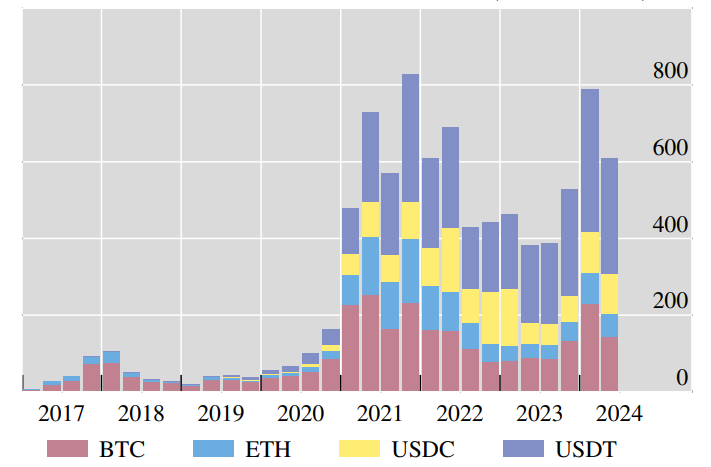
The study spans from 2017 to Q2 2024, providing a detailed look at how the scale and geography of cross-border blockchain transactions have evolved over time.
Global Volumes and Shifting Geography
The BIS report highlights that the U.S., the U.K., and several major emerging markets, including India, Indonesia, and Turkey, have become key hubs in the global network of crypto flows. Over the past few years, activity has notably shifted away from China, reflecting user reactions to tighter regulatory crackdowns.
According to the report:
- In 2021, cross-border flows peaked at $2.6 trillion, with native cryptocurrencies and stablecoins accounting for roughly equal shares.
- By 2023, that figure had declined to $1.8 trillion.
Nevertheless, despite global market turbulence, volumes stabilized by mid-2024, signaling resilient demand for crypto transactions.
Speculative Drivers and the Role of Market Conditions
An assessment of the factors influencing cross-border flows reveals a strong positive correlation with the Volatility Index (VIX) and crypto risk factors. A 1% increase in the VIX correlates with a more than 2% rise in crypto flows.
Conversely, tighter financial conditions—such as wider credit spreads and high Fed rates—lead to a 3% to 10% drop in flows, depending on the asset.
The data points to the use of cryptocurrencies as speculative tools, highly sensitive to global financial shocks, and highlights the growing ties between DeFi and traditional markets.
Related: Trust the Rails: Why Stablecoins Just Overtook Visa
Transactional Drivers and the Impact on Remittances
For stablecoins and smaller Bitcoin transfers, transactional use cases remain a key factor. The report points to a clear correlation between high fees on traditional remittance channels and increased flows in USDT and low-value BTC transactions.
In countries facing inflationary pressure or volatile local currencies, demand for cryptocurrency transfers rose notably:
- USDC flows jumped by more than 50%
- USDT flows increased by 15–20%
Related: William Quigley, WAX/Tether: Stablecoins’ Role in Global Payments
Moreover, capital controls failed to curb crypto activity. In fact, Bitcoin transactions often spiked following the introduction of tighter restrictions.
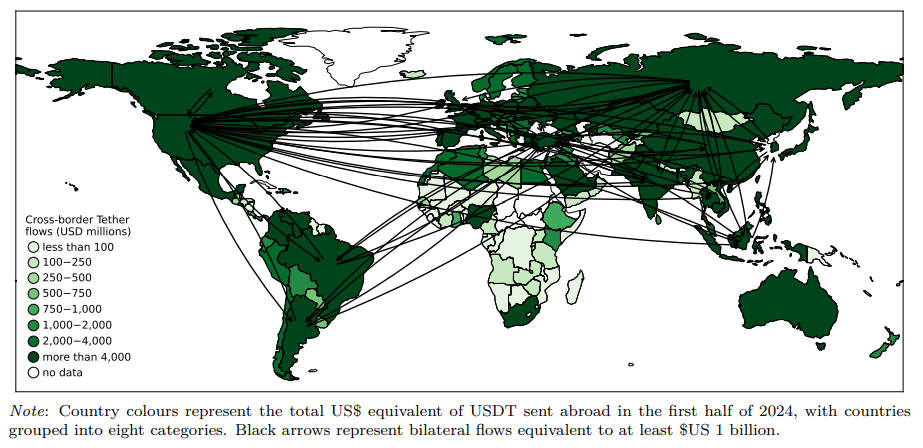
Flow Geometry: Key Insights from the BIS
The BIS report highlights that cross-border crypto flows remain significant, despite regulatory hurdles and macroeconomic shocks. This points to increasing user adaptability and a growing integration of crypto assets into global financial systems.
Key insights:
- Volatility and financial conditions are major drivers of transaction dynamics
- Stablecoins play a role in reducing remittance costs
- A coordinated international regulatory dialogue is crucial to align cross-border payment systems and mitigate financial risks
The content on The Coinomist is for informational purposes only and should not be interpreted as financial advice. While we strive to provide accurate and up-to-date information, we do not guarantee the accuracy, completeness, or reliability of any content. Neither we accept liability for any errors or omissions in the information provided or for any financial losses incurred as a result of relying on this information. Actions based on this content are at your own risk. Always do your own research and consult a professional. See our Terms, Privacy Policy, and Disclaimers for more details.
Articles by this author