Gold falls toward $5,000 as dollar strengthens and oil jumps

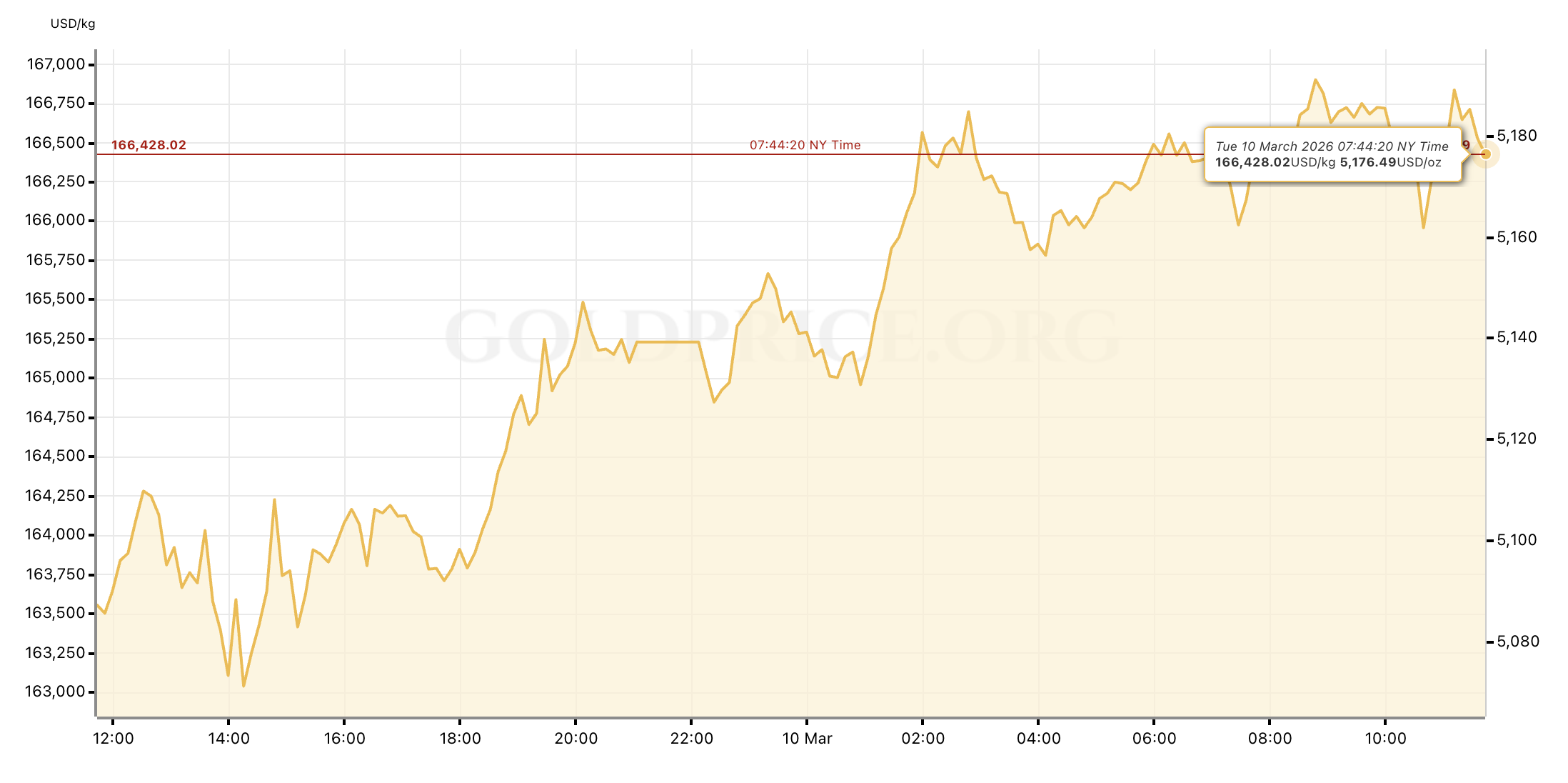
Gold eased to $5,000-$5,100 an ounce from $5,400 as the dollar firmed after U.S.-Israeli strikes on Iran; analysts expect the dip to be brief.
Gold prices slipped to $5,000-$5,100 an ounce, retreating from about $5,400 seen at the start of the latest Middle East escalation following U.S. and Israeli strikes on Iran. A stronger dollar pulled in haven flows and prompted some investors to raise cash.
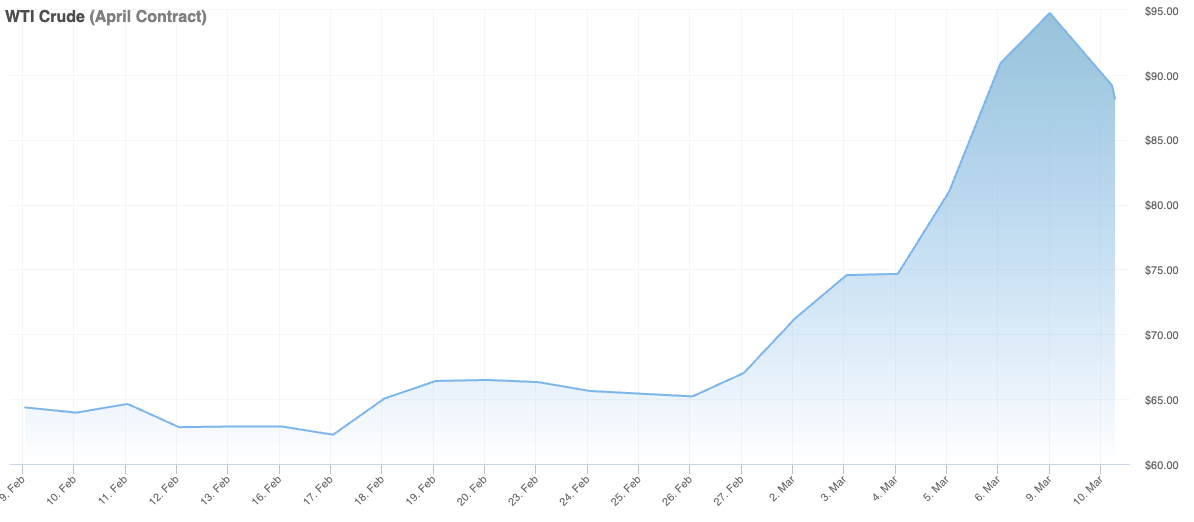
Oil briefly topped $100 a barrel on March 8 before easing to around $90, fueling inflation concerns and lifting the U.S. Dollar Index toward 100. Stock declines across the U.S., Asia and Europe sparked margin calls, prompting some funds to liquidate gold to obtain dollars.
Huynh Trung Khanh, vice chairman of the Vietnam Gold Business Association, linked the decline to dollar strength rather than a shift in fundamentals. “During periods of strong market volatility, demand for cash, particularly the U.S. dollar, increases, causing funds to temporarily exit gold,” he explained, describing the pullback as temporary. Bui Van Huy, vice chairman of FIDT Investment Consulting and Asset Management Company, noted that holding dollars during sharp swings allows investors to redeploy when other assets reset to more attractive levels.
Central bank activity remains in focus. The National Bank of Poland is considering a sale of 100-200 tons of gold to support defense spending, while the broader pattern of official-sector accumulation persists. China’s central bank has recently reported modest additions of one to two tons a month.
For the near term, the World Gold Council deemed price direction hard to call over the next two weeks and expects wider swings, assigning a 57% probability to gains. It also expects conflict-driven dollar strength to fade, a backdrop that would support bullion.
From a technical perspective, the $5,000 mark serves as a critical psychological level. A weekly close below this threshold could signal a deeper pullback, whereas price stability at this level may initiate a rebound. Our analysis identifies $5,200, $5,000, and $4,900 as key levels to monitor.
Investors are tracking U.S. inflation reports this week, including the consumer price index and the personal consumption expenditures gauge favored by the Federal Reserve, for clues on policy. Khanh pointed to longer-term supports such as Middle East risks, potential energy supply disruptions and expectations for U.S. monetary easing later this year. While the Fed may not rush to cut, markets are still pricing in two reductions this year.
Large banks including Citi, JPMorgan and Bank of America maintain positive outlooks on gold and view a sharp, sustained decline as unlikely in the near term. In a fresh forecast following the Iran escalation, UOB kept a favorable stance, lifting its year-end target to $5,800 and noting potential for $6,000 early next year, citing continued central bank purchases and stronger retail buying of physical metal.
Industry data show gold has advanced in roughly two-thirds of past geopolitical flare-ups.
The content on The Coinomist is for informational purposes only and should not be interpreted as financial advice. While we strive to provide accurate and up-to-date information, we do not guarantee the accuracy, completeness, or reliability of any content. Neither we accept liability for any errors or omissions in the information provided or for any financial losses incurred as a result of relying on this information. Actions based on this content are at your own risk. Always do your own research and consult a professional. See our Terms, Privacy Policy, and Disclaimers for more details.
Articles by this author