EU unemployment drops to record low 5.8% in January 2026

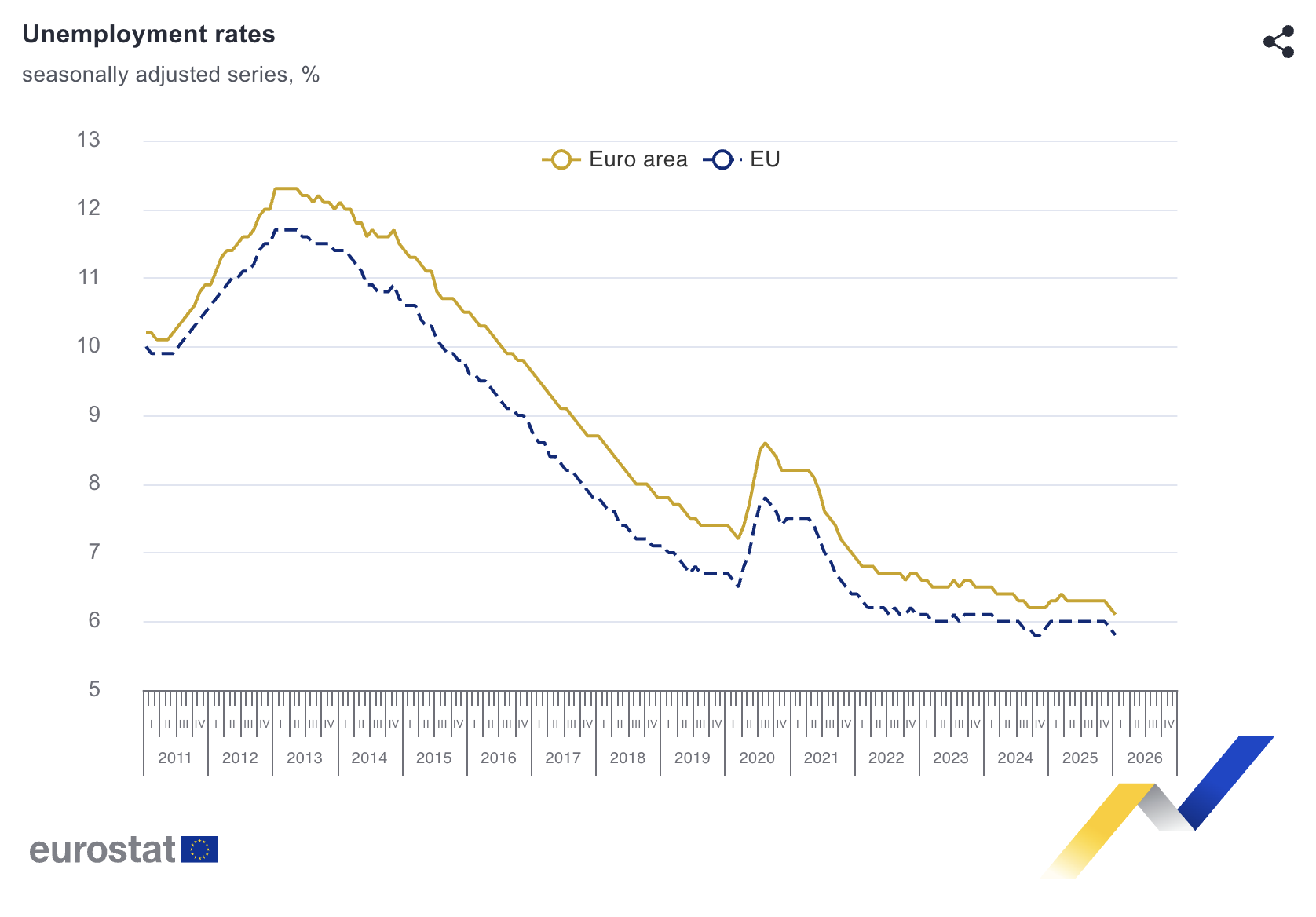
Seasonally adjusted unemployment fell to 5.8% in the EU and 6.1% in the euro area in January 2026, edging down from 5.9% and 6.2% in December, according to Eurostat.
Seasonally adjusted unemployment in the European Union fell to 5.8% in January 2026. The euro area rate was 6.1%. Both were 0.1 percentage point lower than in December 2025 and down from 6.0% and 6.3% in January 2025, Eurostat data show.
Eurostat estimates 12.928 million people were unemployed in the EU in January, including 10.770 million in the euro area. Compared with December, the jobless totals declined by 185,000 in the EU and by 184,000 in the euro area. Versus January 2025, the counts were lower by 274,000 and 273,000, respectively.
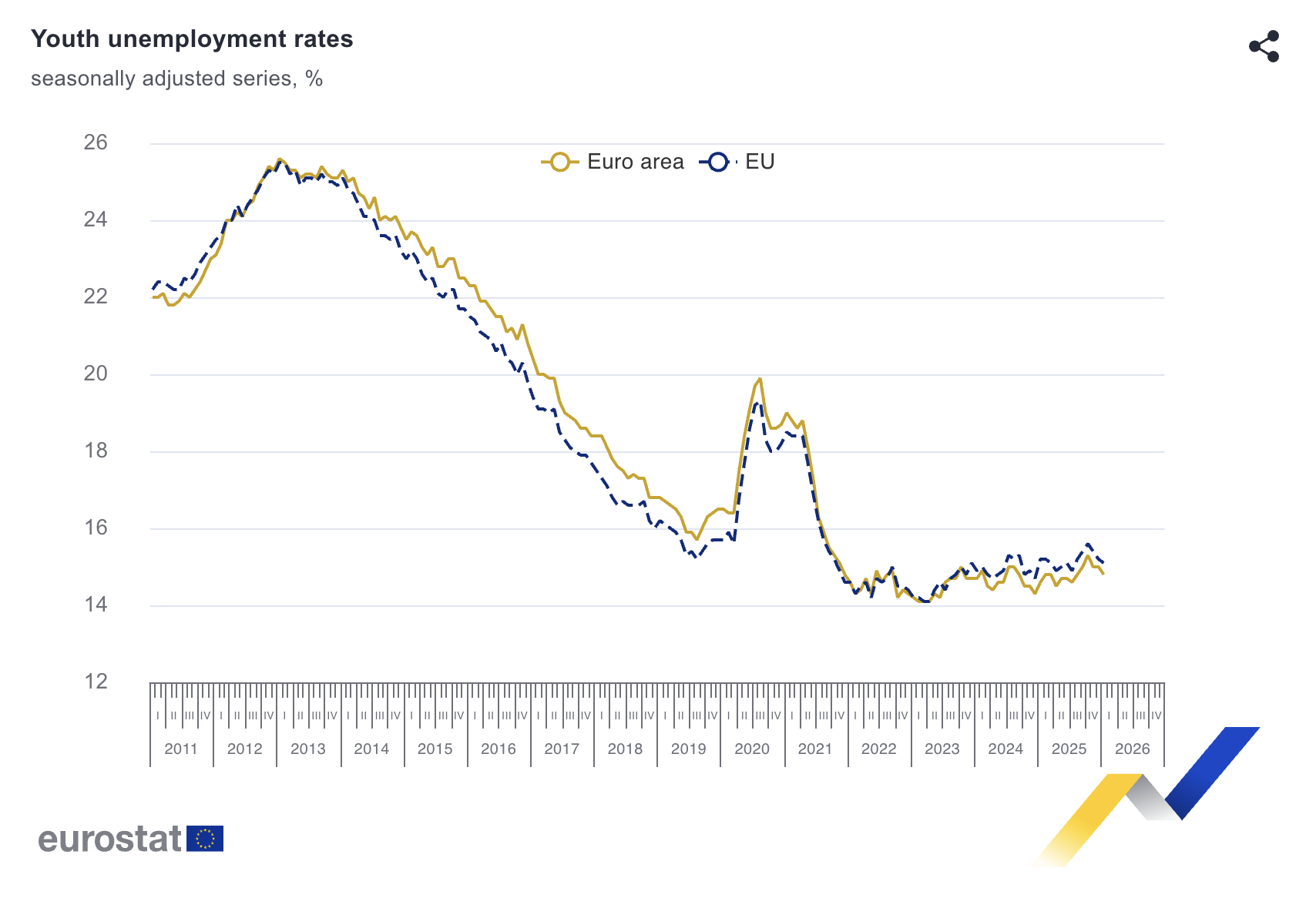
Youth unemployment stood at 15.1% in the EU and 14.8% in the euro area. That equated to 2.922 million people under 25 out of work in the EU and 2.352 million in the euro area. From December, youth joblessness decreased by 27,000 in each region. Year over year, the EU youth total fell by 27,000, while the euro area count rose by 12,000.
By sex, the EU unemployment rate was 6.0% for women and 5.7% for men in January, each 0.1 percentage point lower than in December. In the euro area, women’s unemployment was 6.3% and men’s 6.0%, both down 0.1 point on the month.
Rates varied across member states. Finland recorded 10.2% and Sweden 8.7%. Spain was at 9.8%, France 7.7%, Italy 5.1% and Germany 4.0%. At the lower end, Bulgaria and Poland were at 3.1%, Czechia 3.2%, the Netherlands 4.0% and Malta 3.4%.
Youth joblessness remained high in several countries. Spain posted 23.5%, France 20.9%, Italy 18.9% and Greece 16.0%. Finland was at 22.7% and Sweden 23.9%, while Germany stood at 7.1%, the Netherlands 9.3% and Poland 11.0%.
Eurostat compiles harmonized rates using the International Labour Organization definition: people aged 15 to 74 who are without work, available to start within two weeks and have actively sought a job in the past four weeks. The youth rate refers to people aged 15 to 24 as a share of that age group’s labor force.
The figures are seasonally adjusted. Additional labor market indicators, including underemployed part-time workers and those seeking work but not immediately available, will be released with EU Labour Force Survey results for the fourth quarter of 2025 on March 13, 2026. Routine revisions left December 2025 EU and euro area aggregates unchanged; several country estimates were updated, including downward revisions for Slovenia and upward revisions for Denmark and Greece.
From January 2026, the euro area aggregate includes Bulgaria, bringing the total to 21 members; earlier months referenced a 20-member aggregate.
The content on The Coinomist is for informational purposes only and should not be interpreted as financial advice. While we strive to provide accurate and up-to-date information, we do not guarantee the accuracy, completeness, or reliability of any content. Neither we accept liability for any errors or omissions in the information provided or for any financial losses incurred as a result of relying on this information. Actions based on this content are at your own risk. Always do your own research and consult a professional. See our Terms, Privacy Policy, and Disclaimers for more details.
Articles by this author