

Shor’s Algorithm vs Bitcoin: Is Crypto Ready?

Peter Shor’s quantum algorithm could break Bitcoin’s core cryptography. What does this mean for ECDSA, crypto security, and whether the network is ready to fight back?
One poem. One algorithm. And a future that has cryptographers quietly holding their breath.
If computers that you build are quantum,
— Jennifer and Peter Shor
Then spies of all factions will want 'em.
Our codes will all fail,
And they'll read our email,
Till we've crypto that's quantum, and daunt 'em.
In 1994, mathematician Peter Shor wrote an algorithm that would, years later, keep Bitcoin developers up at night. Back then, it was pure theory—an elegant math trick.
Today, it’s a ticking clock.
Because if quantum computers reach the power Shor envisioned, Bitcoin's core cryptography could be cracked wide open. And the question isn't just if it happens—but when, and whether the crypto world is ready.
Quantum breakthrough: researchers in Shanghai claim to have cracked classical encryption using D-Wave quantum tech. What does this mean for crypto security? Find out in our news coverage!
Meet Peter Shor: The Poet Who Terrified Cryptographers
From Math Problems to Quantum Disruption
Peter Shor didn’t set out to break the world’s most secure systems. He was working on abstract math problems—until he realized that quantum computers could turn the impossible into a weekend project.
I could solve something with a quantum computer that you can't solve with a classical computer. And it was, you know, a very important problem, because discrete logs are used for crypto systems.
— Peter Shor.
The Problem at the Core of Crypto
That “something” was the discrete logarithm problem, a mathematical foundation behind many cryptographic algorithms—including ECDSA, the signature system that secures Bitcoin.
The Breakthrough That Changed Everything
Shor found that if you use quantum Fourier transforms, you can solve this problem exponentially faster than any classical machine. Suddenly, systems like RSA, Diffie-Hellman, and ECDSA had an expiration date.
My algorithm has completely changed cryptography because cryptographers now know that the RSA and Diffie-Hellman, and the old crypto systems based on discrete log and factoring are not necessarily going to be secure forever.
— Peter Shor.

Wait—What Is ECDSA and Why Does Bitcoin Use It?
ECDSA Is a Signature, Not Encryption
ECDSA stands for Elliptic Curve Digital Signature Algorithm. It’s not an encryption method—it’s a signature scheme.
Here’s the simple idea:
When you make a Bitcoin transaction, your private key signs it, and the world uses your public key to verify that you had the right to send that money. The math behind this system relies on the fact that it’s nearly impossible to figure out a private key from its public key.
Denmark’s AI revolution begins with Gefion — a next-gen supercomputer built to power advanced AI applications across science, government, and tech. Explore the impact in our news coverage!
The Quantum Loophole in Bitcoin’s Signature System
That is, unless you’re a quantum computer.
Normally, Bitcoin hides your public key until you spend from the wallet. But once it’s exposed on the blockchain, a powerful enough quantum computer could use Shor’s algorithm to calculate your private key.
Then I figured out how to use the Fourier transform… to find the discrete log for any number.
— Peter Shor.
The Real-World Risk: 3D-Printing the Key
It’s like leaving your keys out just long enough for a thief to 3D-print them.
How Bad Could It Get?
A sufficiently powerful quantum computer could ‘break' the BTC network… but we aren't sure when such sufficiently powerful computers will come. They may be here already.
— u/ConfidentialX
This fear weighs heavily on the minds of developers and cryptographers. If a state-level actor (or rogue quantum lab) can extract private keys from exposed public keys, they could:
- Steal coins, gaining unauthorized control of digital wallets.
- Replay transactions, creating fraudulent duplicates and disrupting the network.
- Disrupt the trust model of Bitcoin itself, undermining its core principles of security and decentralization.
Most estimates say we're at least 10–20 years away from a machine that can break Bitcoin at scale. But “at least” isn't comforting in a field where code ossifies and wallets live forever.
Quantum computers could be a threat, but not anytime soon. Bitcoin’s encryption is strong… by the time quantum tech gets powerful enough, the network will likely have adapted.
— u/Internal_West_3833
Still, the transition won’t be easy.
Fixing the Future: Can Bitcoin Adapt?
The good news–yes. Bitcoin can change.
The bad news–changing it is hard.
Any major cryptographic upgrade to Bitcoin must go through a process of community consensus, technical implementation, and possibly a soft fork. This means that thousands of nodes, developers, and users must agree and act before a threat materializes.
Should Bitcoin upgrade the network? Yes… but it will be a relatively arduous process… especially as many holders will need convincing as the threat isn't immediate.
— u/ConfidentialX
There are proposals already circulating:
- New address formats that never expose the public key
- Quantum-resistant signature algorithms (like Lamport signatures, lattice-based crypto)
- Hybrid schemes combining classical and post-quantum security
- Time-locked transitions to force future safety nets
But Shor himself is cautious:
We would really like to make these crypto systems as efficient as possible without compromising them, and I really don't think they know how to do that yet.
Efficiency is a real concern. Bitcoin values minimalism. Larger signatures, slower verifications, or heavier keys could clog the chain or alienate users.
Still, researchers continue to experiment.
So they're trying to come up with quantum-resistant crypto systems, and this has been an immense area of research.
— Peter Shor
Quantum attack risks in blockchain, and how Vitalik Buterin thinks we should prepare. Explore the basics of quantum computing and what it means for crypto security in our latest guide!
It’s Bigger Than Bitcoin
Quantum Advantage Means Geopolitical Power
This isn’t just about crypto. Whoever gets to this point basically holds a LOT of power—hence the investment by large organizations and governments.
— u/SchmeedsMcSchmeeds
Quantum computing is a race that touches:
- National security,
- Private communications,
- Financial infrastructure,
- Nuclear deterrence.
Bitcoin is simply one of the most visible places where this collision plays out in public.
Beyond Wallets: The True Stakes of Quantum Cryptography
The people who are building postquantum cryptography aren’t just thinking about your wallet. They’re thinking about your country, your cloud data, and your DNA records.
Global Standards Are in Motion
That’s why standards bodies like NIST (National Institute of Standards and Technology) are running competitions to select quantum-safe algorithms—and why cryptographers don’t laugh anymore when you mention “Shor’s algorithm” in a serious room.
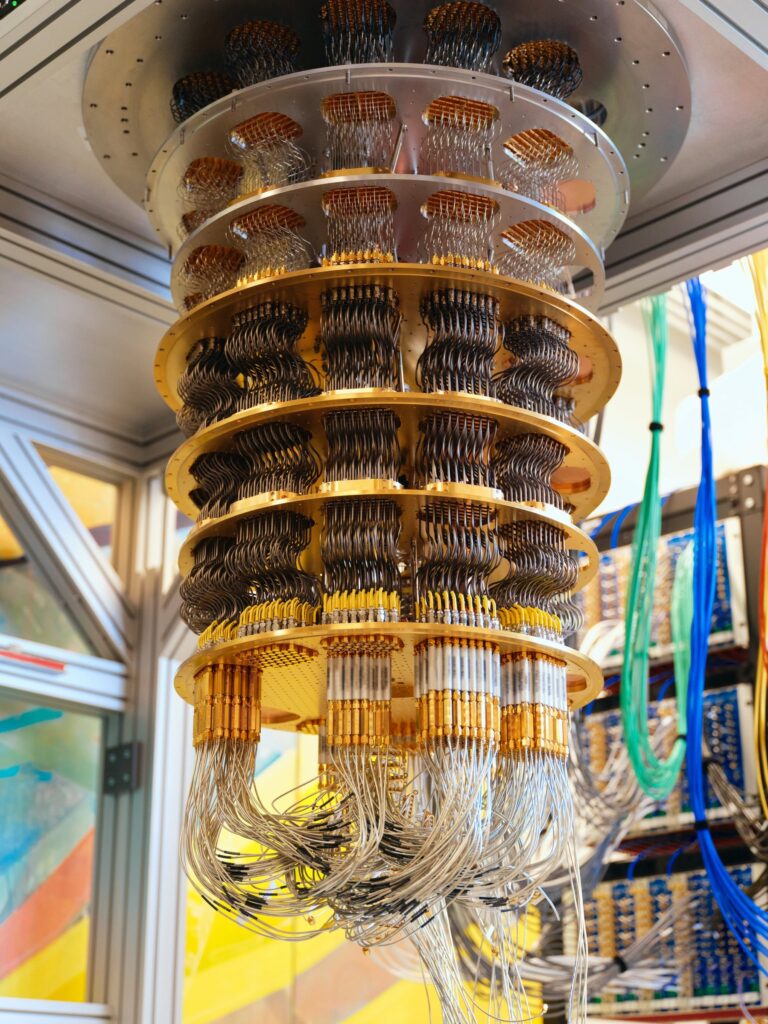
Are quantum computers a threat to crypto? As headlines stir fear, we break down the facts, risks, and how the industry is preparing for a post-quantum future in our latest opinion piece!
Therefore, Is Crypto Ready?
Not yet.
But the industry is thinking fast.
The rise of quantum computing isn’t a horror movie ending but a rewrite challenge. A call to re-engineer what we thought was eternal. And that means new math, new standards, and a lot of social coordination.
Bitcoin has weathered forks, bugs, bans, and bear markets. Quantum may be its hardest test yet—but also a chance to show that decentralization can evolve.
Peter Shor, as for him? He’s still watching the field evolve, algorithms unfold, and quantum dreams creep toward reality.
And sometimes he still writes poems with his wife.
If you're holding long-term crypto, this isn't your cue to panic—but it might be your cue to pay attention. Because in the world of cryptography, time is measured in breakthroughs, not blocks.
The content on The Coinomist is for informational purposes only and should not be interpreted as financial advice. While we strive to provide accurate and up-to-date information, we do not guarantee the accuracy, completeness, or reliability of any content. Neither we accept liability for any errors or omissions in the information provided or for any financial losses incurred as a result of relying on this information. Actions based on this content are at your own risk. Always do your own research and consult a professional. See our Terms, Privacy Policy, and Disclaimers for more details.
Articles by this author







