Real-world asset tokenization market eyes $15T by 2030

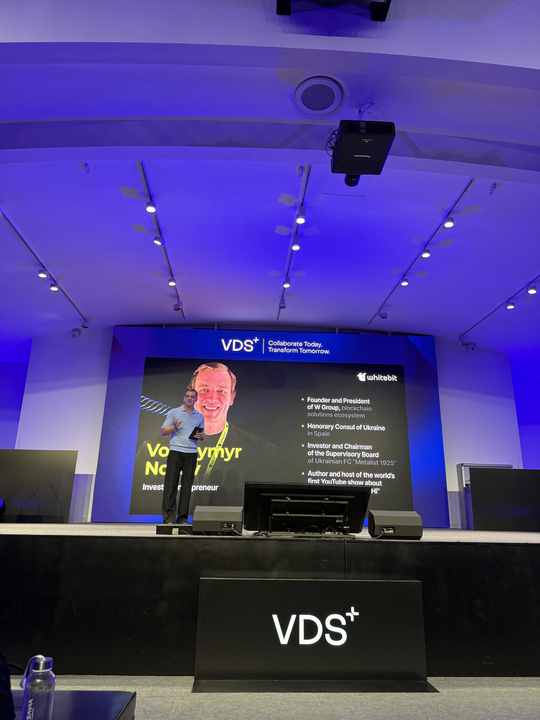
Real-world asset tokenization market, currently valued at $1-2 trillion, could expand to $15 trillion over five years, Volodymyr Nosov, CEO of WhiteBIT, projected during the Valencia Digital Summit. Institutional adoption drives the forecast.
The tokenized real-world asset market could experience six-to-eightfold growth within five years, reaching $15 trillion as institutional players integrate blockchain technology into traditional finance operations.
Volodymyr Nosov, Founder and CEO of WhiteBIT, shared this projection at Valencia Digital Summit on October 22, citing accelerating institutional interest from major financial firms including BlackRock and JPMorgan.

Institutions driving tokenization shift
Tokenization of real-world assets is not just a trend, it's an economic revolution,” Nosov stated during his presentation. “With institutional investors moving towards tokenized assets, we will witness remarkable growth in this market.
The traditional finance sector increasingly views tokenization as a practical method to streamline asset ownership and transfer rather than experimental technology. This shift in perception underpins growth projections.
Asset tokenization makes it possible to split ownership, trade across borders around the clock, and build in programmable compliance – something traditional securities systems still struggle to achieve. Real estate, commodities, private equity, and bonds have become top priorities for tokenization efforts as institutions pursue efficiency gains and broader market access.
Billions in potential savings
Nosov highlighted substantial cost reduction potential blockchain infrastructure offers existing financial systems. Banks could save $8-12 billion annually on international transfers by adopting blockchain, eliminating intermediaries and compressing settlement windows from days to minutes.
These savings come from blockchain’s peer-to-peer value transfer design, removing the need for multiple intermediary institutions to verify and process transactions. Current cross-border payment systems rely on correspondent banking networks that layer time, cost, and complexity onto international transfers.

Developer shortage poses constraint
Nosov cautioned that limited blockchain developer supply could throttle sector growth.
In Europe alone, the number of blockchain jobs has increased by 40% compared to last year. However, there is a problem: the number of developers capable of creating blockchain products is very limited – there are only 5,000-7,000 of them across Europe,
he observed.
This talent bottleneck emerges as blockchain implementation demand accelerates across financial services, supply chain management, digital identity, and additional sectors. The gap between available developers and market requirements suggests potential adoption timeline delays absent significant education and training program expansion.
Crypto adoption context
Nosov positioned tokenization growth within broader cryptocurrency adoption trends. Over 600 million cryptocurrency users exist globally, while total digital asset market capitalization has surpassed $4 trillion – representing 70% growth over just the past year.
More than 130 countries are exploring Central Bank Digital Currencies (CBDCs) as part of monetary system modernization initiatives. These pilots mark governments increasingly consider blockchain a mechanism for faster, more inclusive payments.
Together, these forces point to a layered transformation of global financial infrastructure..
Structural implications
A $15 trillion tokenized asset market would fundamentally alter how financial assets are issued, traded, and settled. Traditional securities exchanges, clearing houses, and custody providers face potential disruption as blockchain alternatives offer faster settlement, reduced costs, and programmable compliance.
Regulatory frameworks remain incomplete across most jurisdictions. Clear legal standards for tokenized asset ownership, investor protection, and cross-border interoperability will determine whether projected growth materializes within the five-year window or encounters extended delays.
Institutional involvement from firms like BlackRock and JPMorgan signals growing confidence that regulation will catch up, enabling traditional finance-blockchain integration rather than parallel system development.
Market growth velocity will depend on regulatory evolution, institutional adoption pace, developer capacity expansion, and demonstrated value tokenization delivered to investors. Current momentum indicates tokenization will play a significant role in financial markets' next phase, though precise growth rates remain uncertain.
Valencia Digital Summit background
Valencia Digital Summit ranks among Europe's premier digital technology conferences, serving as a forum for examining cryptocurrency and tokenization developments alongside wider technology-driven business transformation.
The speaker lineup extended beyond Nosov to include executives from Glovo and Booking.com, plus Hollywood actress Kelly Rutherford, who actively invests in tech startups.
The content on The Coinomist is for informational purposes only and should not be interpreted as financial advice. While we strive to provide accurate and up-to-date information, we do not guarantee the accuracy, completeness, or reliability of any content. Neither we accept liability for any errors or omissions in the information provided or for any financial losses incurred as a result of relying on this information. Actions based on this content are at your own risk. Always do your own research and consult a professional. See our Terms, Privacy Policy, and Disclaimers for more details.
Articles by this author