Zcash jumps 30% on U.S.-Iran ceasefire hopes
Zcash rose about 30% after reports of a U.S.-Iran ceasefire, with spot volumes climbing as traders moved into ZEC within 24 hours.
Zcash climbed roughly 30% on major cryptocurrency trading platforms within 24 hours after reports that the United States and Iran were moving toward a ceasefire. Spot trading volumes for ZEC rose during the same period as buyers entered the market.
The price surge occurred earlier this week as easing geopolitical risk coincided with a broader rotation into risk assets. ZEC ranked among the top daily gainers in the crypto sector during the 24-hour window.
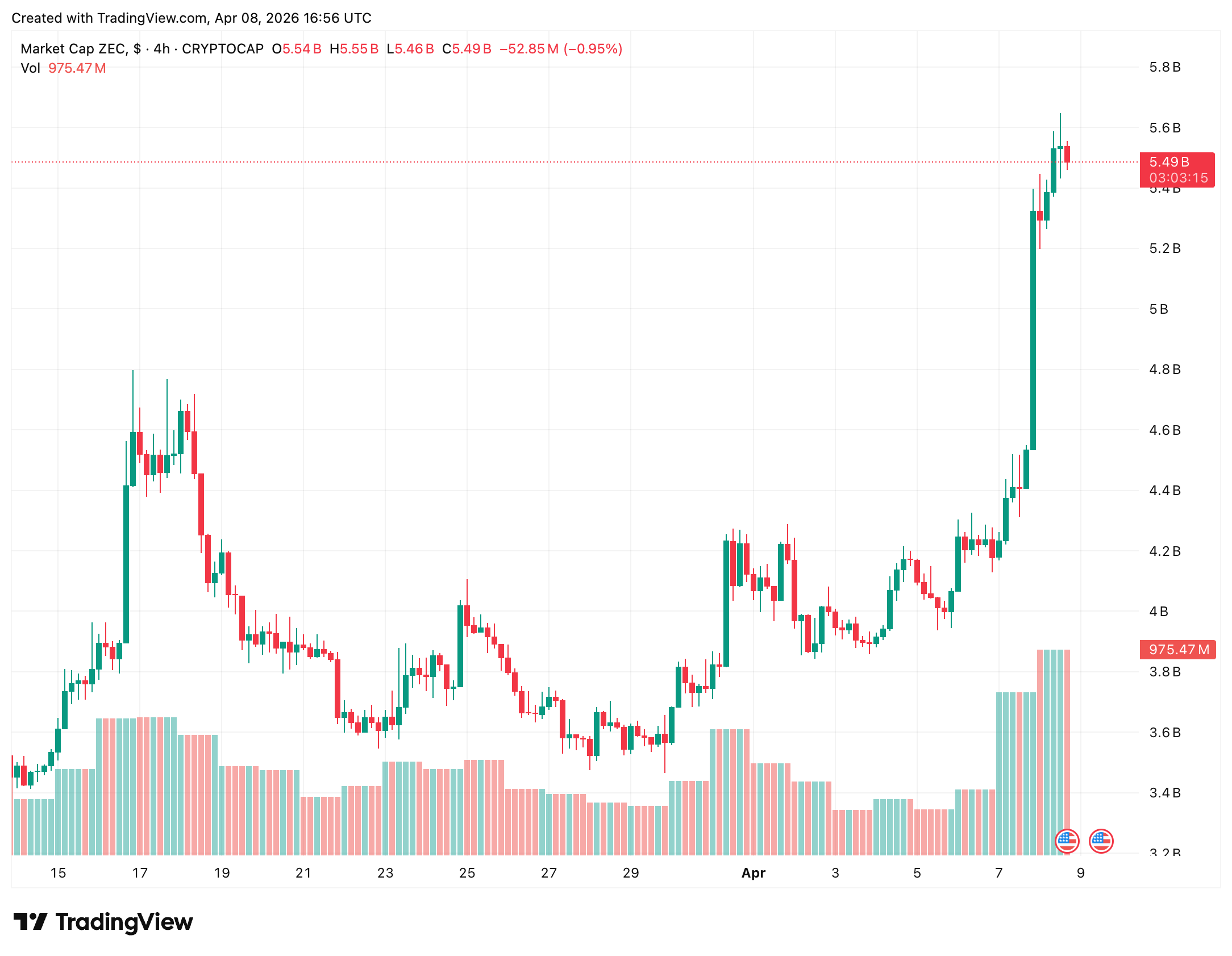
Smaller, more liquid tokens such as ZEC often experience amplified price moves when traders concentrate on a limited set of speculative assets. Rapid inflows and higher spot volumes can push prices up quickly; historical patterns show such rallies may reverse when headline-driven demand fades.
Publicly available on-chain indicators presented a mixed picture during the rally. Price and trading volume increased faster than active addresses and transaction counts, suggesting the spike reflected trading activity more than a measured rise in on-chain use.
Zcash offers optional privacy features that use zero-knowledge proofs to hide sender, recipient and amount details when users choose shielded transactions. The protocol is developed by the Electric Coin Company with involvement from community groups. Those privacy capabilities have led to regulatory scrutiny in some jurisdictions and have affected exchange listings and institutional access to the token.
Market participants identified several indicators to watch for signs of sustainability: continued trading volume beyond the initial surge, growth in active addresses and transaction counts, public statements from developers or exchanges, and broader market trends in bitcoin and large-cap altcoins. A reversal in risk appetite or a lack of follow-through in on-chain activity would increase the likelihood of a short-lived rally.
Zcash launched in 2016 and has a market capitalization that remains modest compared with top cryptocurrencies. Its smaller market size and typical volatility for lower-cap digital assets can make it more sensitive to short-term flows tied to headlines rather than shifts in long-term adoption.
The content on The Coinomist is for informational purposes only and should not be interpreted as financial advice. While we strive to provide accurate and up-to-date information, we do not guarantee the accuracy, completeness, or reliability of any content. Neither we accept liability for any errors or omissions in the information provided or for any financial losses incurred as a result of relying on this information. Actions based on this content are at your own risk. Always do your own research and consult a professional. See our Terms, Privacy Policy, and Disclaimers for more details.
Articles by this author