U.S. sanctions IRGC crypto wallets; Tether freezes $344M

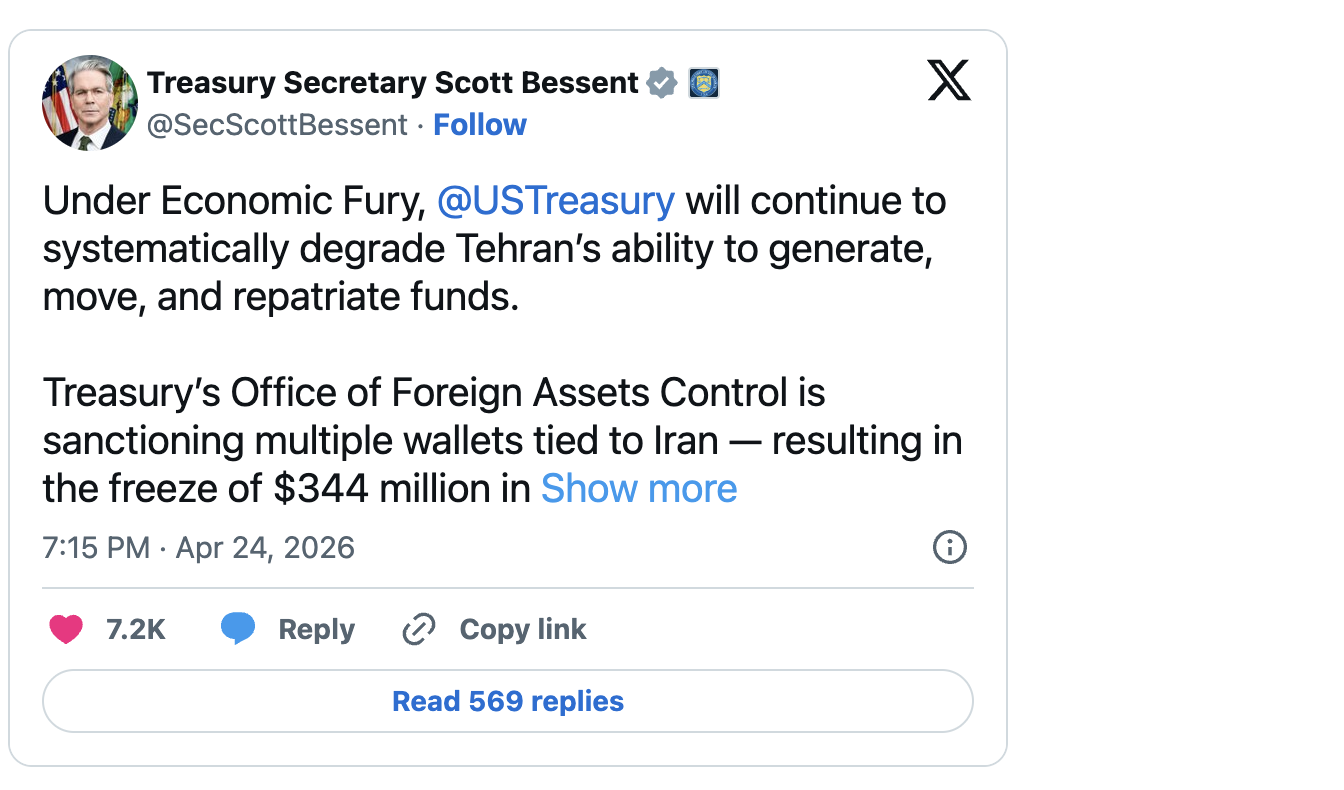
On April 24 the U.S. Treasury sanctioned crypto wallets tied to Iran’s IRGC and Tether froze $344 million in USDT on two Tron addresses under Operation Economic Fury.
On April 24 the U.S. Treasury's Office of Foreign Assets Control blacklisted multiple crypto wallet addresses tied to Iran's Islamic Revolutionary Guard Corps under an operation called Operation Economic Fury. At the direction of U.S. authorities, Tether froze $344 million in USDT held across two addresses on the Tron blockchain.
The two Tron wallets held roughly $213 million and $131 million in USDT. Tether applied the freeze at the issuer level through its USDT smart contract, leaving the tokens on-chain but preventing transfers while the Tron network continued to operate.
Treasury Secretary Scott Bessent wrote in a statement: ‘We will follow the money that Tehran is desperately attempting to move outside of the country and target all financial lifelines tied to the regime.' The Treasury said the action was intended to cut off financial channels used by the Iranian regime during the ongoing conflict.
Chainalysis found that the wallets' transaction patterns matched behaviors seen in other IRGC-linked accounts, with frequent large transfers between private wallets. Investigators identified links to Iranian exchanges and intermediary addresses that had interacted with wallets associated with the Central Bank of Iran.
Tether confirmed it executed the freeze in coordination with the Treasury and law enforcement and reiterated that it blocks payments used to evade sanctions. U.S. officials described the $344 million freeze as the largest single crypto freeze directly linked to Iran since the conflict began.
Chainalysis estimates Iran's visible crypto ecosystem reached about $7.8 billion in 2025, with IRGC-linked holdings making up roughly half of on-chain assets by the fourth quarter of that year. Iran legalized bitcoin mining in 2019 and began accepting stablecoin payments for military export contracts in January 2026. The country also operates a toll system for the Strait of Hormuz that in practice channels payments via stablecoins and yuan.
Experts said the freeze removes a visible pool of on-chain holdings but may not fully prevent Iran from moving digital assets because of wider networks and third-country facilitators that can enable transfers.
The content on The Coinomist is for informational purposes only and should not be interpreted as financial advice. While we strive to provide accurate and up-to-date information, we do not guarantee the accuracy, completeness, or reliability of any content. Neither we accept liability for any errors or omissions in the information provided or for any financial losses incurred as a result of relying on this information. Actions based on this content are at your own risk. Always do your own research and consult a professional. See our Terms, Privacy Policy, and Disclaimers for more details.
Articles by this author