Super Micro stock falls after co-founder arrest in AI chip probe

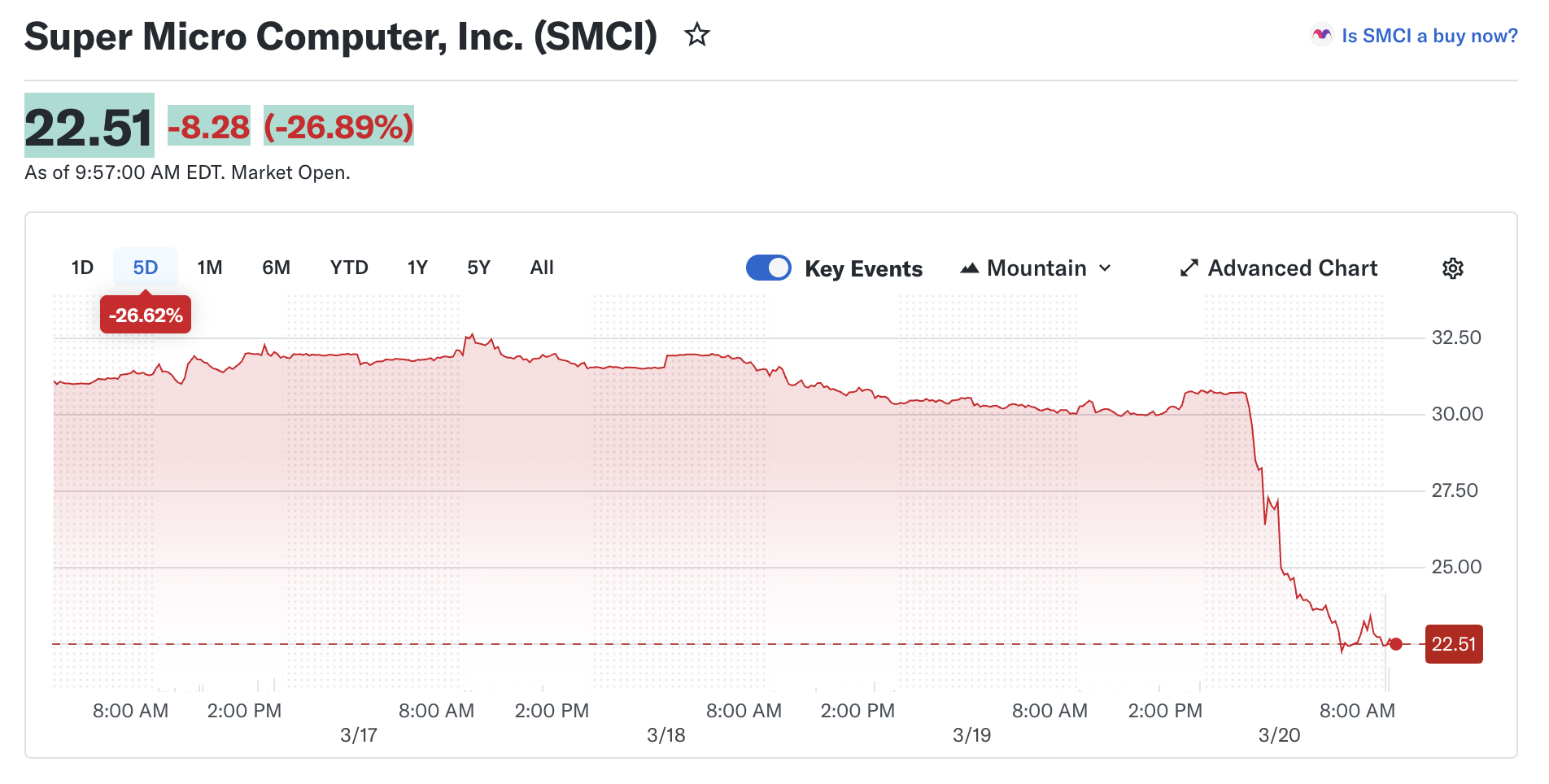
Super Micro shares fell 25.3% in premarket trading after co‑founder Yih‑Shyan Liaw was arrested on charges of conspiring to smuggle Nvidia AI chips to China.
Super Micro Computer Inc. shares dropped 25.3% in premarket trading Friday to about $23 after co‑founder and senior vice president of business development Yih‑Shyan Liaw was arrested and charged in an alleged scheme to export Nvidia AI chips to China. The slide would reduce the company’s market value by roughly $4.7 billion, from about $18.4 billion to $13.7 billion based on Thursday’s close. It was the stock’s largest single‑day premarket decline since October 2024, when shares fell 32% in a session.
The Justice Department announced Thursday that Liaw, Ruei‑Tsang Chang, a manager in Super Micro’s Taiwan office, and outside contractor Ting‑Wei Sun face counts of violating U.S. export control laws, conspiring to smuggle goods from the United States and conspiring to defraud the United States. Prosecutors allege the three sold restricted Nvidia‑powered GPUs through a Southeast Asia firm identified in the indictment as “Company‑1” and then moved those chips to China using third‑party brokers.
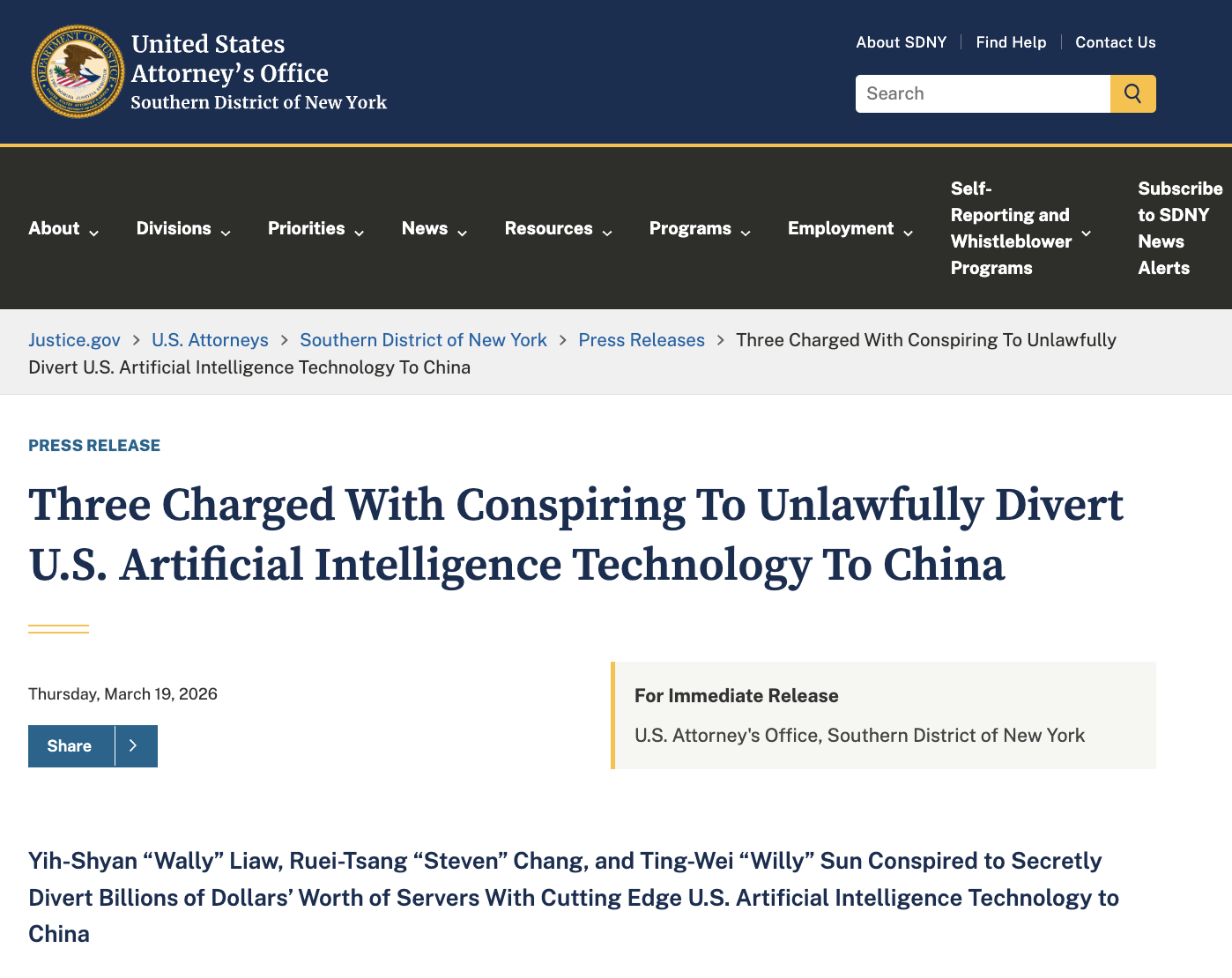
The indictment says the transactions generated roughly $2.5 billion in sales for Super Micro since 2024. Federal prosecutors did not identify Company‑1 by name in public filings and asserted the defendants used a network of brokers and shell transactions to conceal the chips’ final destination and to evade U.S. licensing requirements. Each defendant was charged with one count on each of the three offenses.
Super Micro, which is not named as a defendant, placed Liaw and Chang on administrative leave and said it had ended its relationship with the contractor. Liaw co‑founded the company in 1993 and holds an estimated $464 million in Super Micro stock, according to data cited by prosecutors. Company officials provided no further comment beyond the administrative‑leave notice.
U.S. export controls restricting certain high‑performance GPUs to China were first imposed in 2022. Some limits were later eased, including a December decision that allowed exports of select Nvidia chips, such as the H200, under revised rules. Nvidia’s advanced GPUs are widely used for training large AI models and other demanding computing tasks.
The Justice Department will present the charges in federal court. The defendants will have an opportunity to respond to the allegations through the legal process.
Earlier, Supermicro said the U.S. Attorney’s Office unsealed an indictment accusing three people tied to the firm — co‑founder and SVP of business development Yih‑Shyan “Wally” Liaw, Taiwan sales manager Ruei‑Tsang “Steven” Chang and contractor Ting‑Wei “Willy” Sun — of export‑control violations; the company, not named as a defendant, placed the two employees on administrative leave, ended the contractor relationship, said the alleged conduct violated its policies and compliance controls, and stated it has been cooperating with the government's investigation.
The content on The Coinomist is for informational purposes only and should not be interpreted as financial advice. While we strive to provide accurate and up-to-date information, we do not guarantee the accuracy, completeness, or reliability of any content. Neither we accept liability for any errors or omissions in the information provided or for any financial losses incurred as a result of relying on this information. Actions based on this content are at your own risk. Always do your own research and consult a professional. See our Terms, Privacy Policy, and Disclaimers for more details.
Articles by this author