Iran rebukes Trump over Hormuz claims, denies uranium transfer
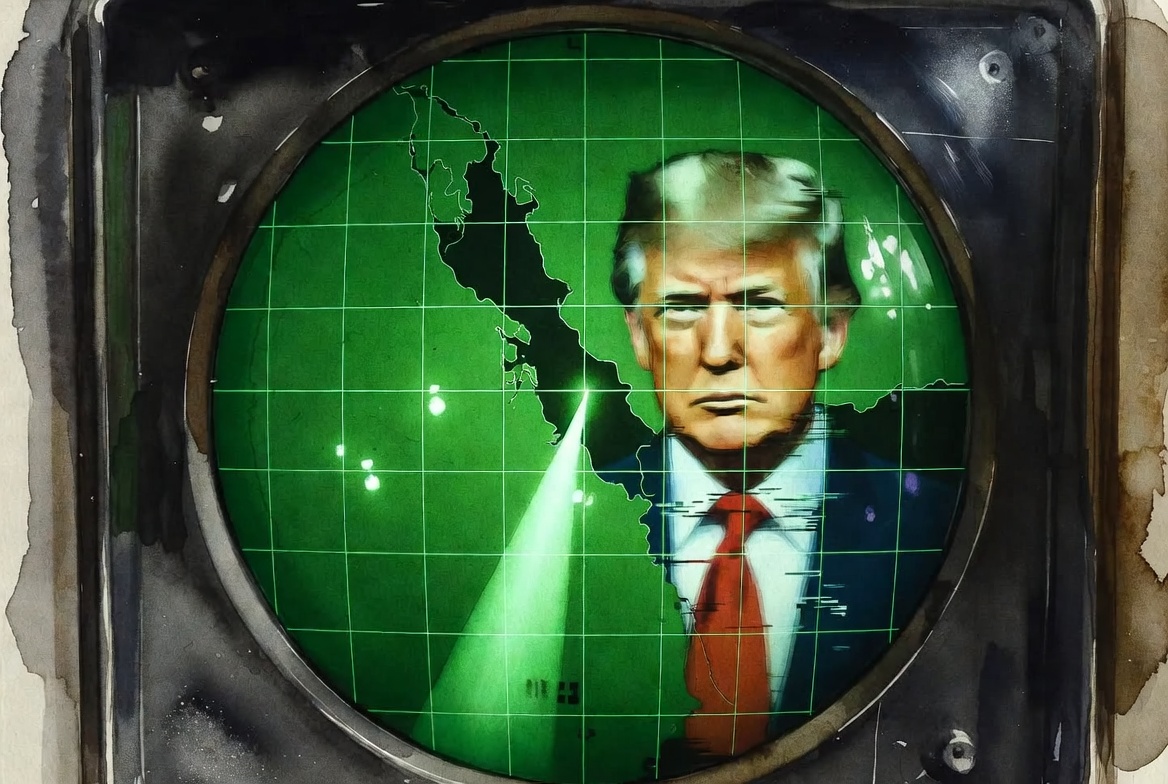
Iran’s parliament speaker Mohammad Bagher Ghalibaf accused President Donald Trump of seven false claims about the Strait of Hormuz reopening and denied any uranium transfer deal.
Iran’s parliament speaker Mohammad Bagher Ghalibaf posted on X and Telegram late Friday that President Donald Trump made “seven claims in one hour, all seven of which were false,” and rejected reports that Tehran agreed to hand over enriched uranium as part of any arrangement tied to the reopening of the Strait of Hormuz.
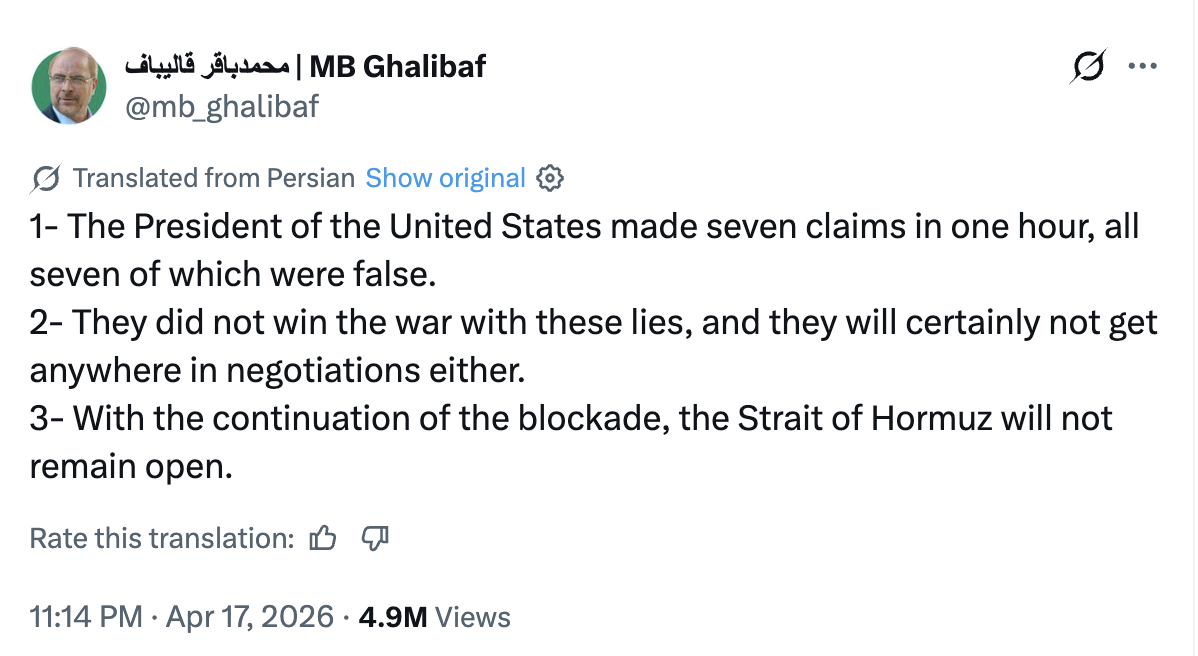
Ghalibaf directly challenged Washington’s public account of negotiations and the ceasefire terms that preceded Tehran’s April 17 declaration that the strait was open. He wrote that U.S. statements did not give Washington leverage and warned that a continued blockade would threaten the strait’s status.
The speaker outlined operational conditions for transit, saying all vessel movements will follow routes designated by Tehran and require Iranian authorization and coordination with its armed forces.
“Whether the Strait is open or closed and the regulations governing it will be determined by the field, not by social media.”
On reports of a U.S. proposal to release $20 billion in frozen funds in exchange for Iran’s enriched uranium, Ghalibaf dismissed the idea and wrote that the material “is in no way going to be transferred anywhere.” A spokesman for Iran’s Parliamentary National Security Committee reiterated that removal of uranium will not be permitted and described public U.S. statements as inaccurate. Ghalibaf added that any naval blockade would be treated by Tehran as a violation of the ceasefire.
Iran’s formal declaration that the Strait of Hormuz was open followed a Lebanon ceasefire that Tehran said met one of its conditions. Despite that declaration, commercial traffic has not returned to pre-conflict levels: shipping volumes remain a fraction of the prior average of 130 to 140 vessels per day, while more than 150 tankers were reported anchored near the strait. Higher insurance costs and mixed signals from Iran and the United States have kept many operators off the route. The United States continues a blockade on Iranian-linked ports and maintains restrictions on parts of maritime access.
Global energy markets reacted to the reopening announcement and the subsequent dispute over the narrative. Brent crude fell more than 9% to about $90.38 per barrel, and U.S. crude dropped roughly 11.4% to around $83.85, reflecting traders' reassessment of supply risk after Tehran’s public pushback.
Diplomatic talks over the conflict and possible exchanges of funds for Iranian nuclear material remain in preliminary stages, with mediators arranging further meetings. Iran’s public rejection of uranium removal complicates those discussions and leaves a clear point of disagreement between negotiators.
The content on The Coinomist is for informational purposes only and should not be interpreted as financial advice. While we strive to provide accurate and up-to-date information, we do not guarantee the accuracy, completeness, or reliability of any content. Neither we accept liability for any errors or omissions in the information provided or for any financial losses incurred as a result of relying on this information. Actions based on this content are at your own risk. Always do your own research and consult a professional. See our Terms, Privacy Policy, and Disclaimers for more details.
Tags
Articles by this author