Dubai sets rules for tokenized assets and stablecoins

Dubai regulators published guidance clarifying licensing, custody, disclosure and reserve rules for tokens tied to real-world assets and for stablecoins.
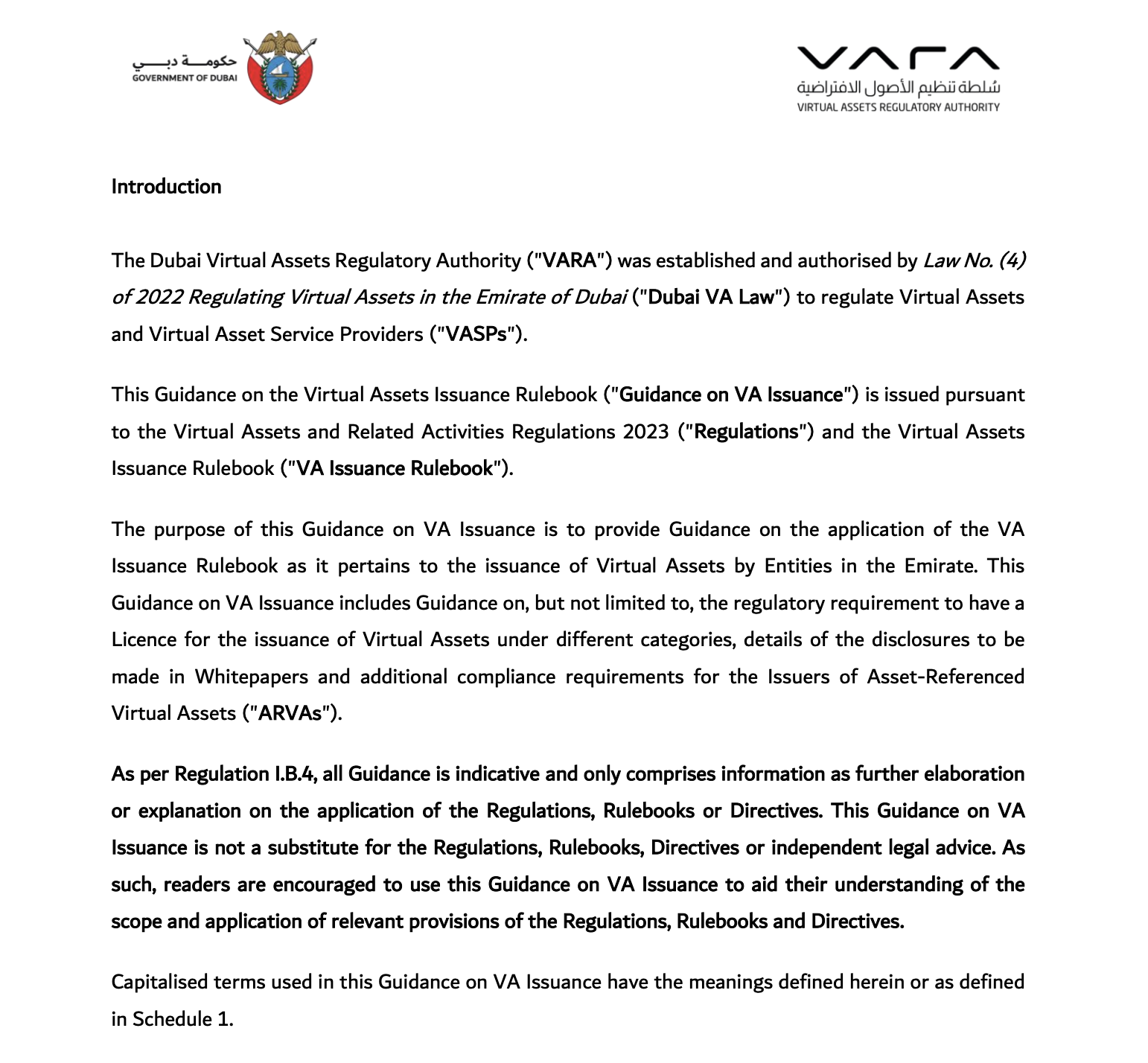
Dubai’s financial regulators published guidance clarifying rules for issuing, listing and operating tokens linked to real-world assets and for stablecoins.
The guidance defines what counts as a tokenized real-world asset and what constitutes a stablecoin. It sets out the approvals and operational controls required before such tokens may be offered to investors in Dubai, and specifies licensing, disclosure, custody and reserve requirements for firms that create, list or operate the tokens.
Issuers must demonstrate legal title to underlying assets or contractual arrangements that give token holders enforceable rights. Documentation must explain how ownership rights are created, held and transferred, and how token redemption or fractionalization will work. Where assets are illiquid or hard to value, issuers must obtain regular independent valuations and describe how they will manage liquidity events.
For stablecoins, the rules distinguish fiat-redeemable coins from algorithmic or other asset-backed designs. Issuers of coins redeemable on demand for a single fiat currency are required to hold reserves in cash, cash equivalents or high-quality liquid assets. The guidance sets expectations for reserve custody, segregation, reconciliation and public reporting, and requires periodic attestations or audits by independent firms to confirm reserve adequacy.
Firms that want to issue, custody, trade or list tokenized real-world assets or stablecoins must apply for the appropriate license and meet fit-and-proper standards. Market operators and trading platforms must establish governance frameworks, risk-management policies and segregation of client assets. Anti-money-laundering and counter-terrorist financing controls, transaction monitoring and customer due diligence are mandatory for participants across the value chain.
Custody arrangements must be robust. When third-party custodians are used, their independence and solvency must be verifiable. Platforms handling client funds must maintain segregated accounts, reconciliation procedures and contingency plans for operational disruptions. The guidance clarifies when foreign-issued tokens offered into Dubai fall under the local regulatory perimeter.
Regulators require clear documentation of the legal relationship between tokens and underlying assets, enforceable remedies if an issuer defaults, and plans for orderly wind-down or transfer of assets if a token issuer ceases operations. Supervisory checks and reporting obligations are intended to give authorities visibility over market activity and allow intervention when necessary.
In a statement, regulators described the guidance as providing greater clarity for businesses while aiming to protect investors and support financial stability.
The content on The Coinomist is for informational purposes only and should not be interpreted as financial advice. While we strive to provide accurate and up-to-date information, we do not guarantee the accuracy, completeness, or reliability of any content. Neither we accept liability for any errors or omissions in the information provided or for any financial losses incurred as a result of relying on this information. Actions based on this content are at your own risk. Always do your own research and consult a professional. See our Terms, Privacy Policy, and Disclaimers for more details.
Articles by this author