Crypto Markets Shed $320 Billion as Sell-Off Intensifies

Data from CoinMarketCap and CoinGlass reveals that over $320 billion vanished from the crypto market, while futures liquidations soared to $1.48 billion.
Bitcoin plunged 8%, shedding $180 billion, while Ethereum plummeted 11%, losing $60 billion. The altcoin market followed suit: Ripple nosedived 13%, Solana dropped 12%, and Dogecoin slid 11%.
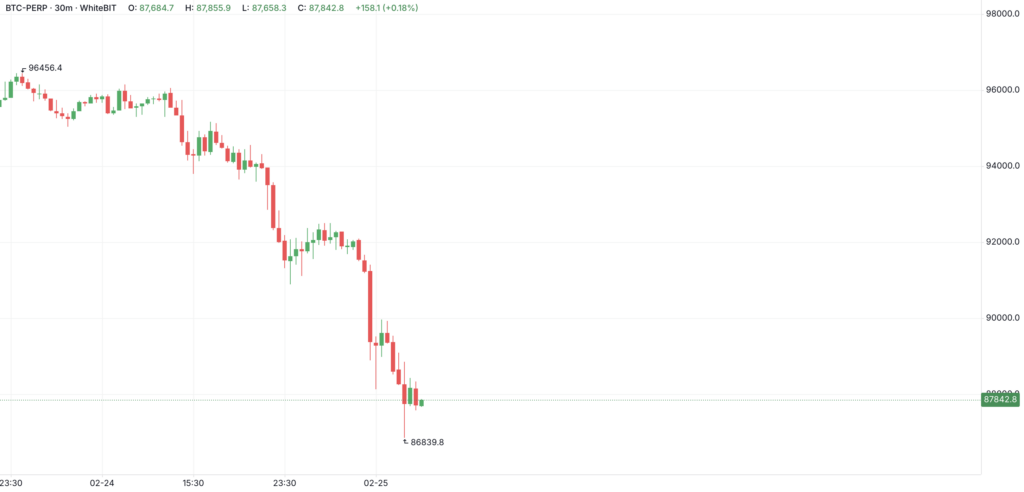
In the futures market, long positions took a massive blow, with $1.36 billion in liquidations, while shorts saw only $114 million erased. Looking deeper, BTC longs accounted for $602 million in losses, while ETH traders lost $278 million betting on a rebound that never came.
Why Did the Crypto Market Crash?
The latest crypto crash seems to stem from a mix of macroeconomic challenges, geopolitical risks, and excessive speculation—a fragile foundation for sustained growth.
Optimistic news, like the U.S. establishing a Bitcoin reserve and progress toward transparent regulations, had already been absorbed by the market. This left prices inflated and vulnerable, with many newer investors bearing the brunt of the correction. As these narratives lost their grip, a wave of sell-offs emerged, led by traders cashing in on unrealized profits before momentum fully shifted against them.
Сheck this out: Pi Token Crashes After Its Grand Debut
The latest inflation figures from the U.S. have rattled markets, making a near-term interest rate cut increasingly unlikely. This has prompted institutional investors to scale back their exposure, with $516 million pulled from spot Bitcoin ETFs in just one day. Whether this signals a broader shift away from crypto or a temporary risk-adjustment move remains to be seen.
Related: 10x Research: The Bitcoin ETF Market—56% Is Arbitrage
Сrypto Market Crash—Why This Drop Feels Different
Bitcoin’s price has tumbled, yet funding rates for futures remain in the green—a rare sight during such aggressive sell-offs. In this setup, long traders, not short sellers, are the ones paying holding fees, hinting at an unexpected market dynamic that could impact future price action.
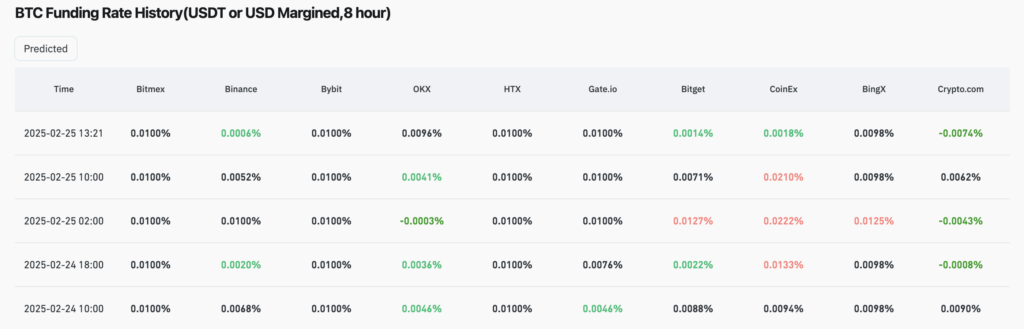
Market crashes don’t just shake up prices—they fuel volatility and set the stage for potential liquidation cascades. Without a turnaround in macro trends, many believe the sell-off isn’t over yet. A key indicator? BTC deposits are rising across most centralized exchanges, except for Coinbase Pro, where 7,600 BTC ($673 million) was pulled—possibly signaling big-money accumulation.
Yet, in the long run, these crashes rarely change the game for institutional investors. Despite their current cautious stance, many see the dip as an opportunity to buy in at lower valuations, reaffirming crypto’s role as a long-term asset class.
Crypto Market Outlook
Short-term corrections aside, crypto’s core fundamentals remain robust. Institutional investors continue expanding their exposure, and Bitcoin is becoming a key asset for diversification in large investment portfolios.
Even more telling, U.S. regulators have shown an increasingly constructive approach to digital assets, reinforcing long-term confidence. Some analysts argue that these factors could fuel a strong market recovery in the months ahead, potentially pushing Bitcoin past $150,000 by late 2025.
Navigating Market Chaos—What Traders Need to Know
When liquidations hit at scale, they expose the crypto market’s sensitivity to uncertainty and leveraged speculation. These moments separate impulsive traders from those who adapt—those who hold their ground rather than chase the panic.
With the Bybit hack wiping out $1.4 billion, it’s also a stark reminder that secure asset allocation matters just as much as market timing. Now might be the perfect moment to reassess long-term positions and strengthen portfolio security.
A worthwhile read: Momentum Trading for Beginners: Things You Need to Know
A smart risk management approach is not to rely on a single exchange—instead, use a mix of centralized and decentralized platforms for added security. Bybit exchange, despite the recent breach, restored secure operations swiftly without restricting withdrawals, signaling its resilience.
For broader coverage, traders may look into WhiteBIT, a well-established European exchange, or Binance, a global industry leader known for its liquidity and scale.
The content on The Coinomist is for informational purposes only and should not be interpreted as financial advice. While we strive to provide accurate and up-to-date information, we do not guarantee the accuracy, completeness, or reliability of any content. Neither we accept liability for any errors or omissions in the information provided or for any financial losses incurred as a result of relying on this information. Actions based on this content are at your own risk. Always do your own research and consult a professional. See our Terms, Privacy Policy, and Disclaimers for more details.
Articles by this author