China Q1 bank lending falls as credit demand weakens

New yuan loans were ¥2.99 trillion in March against ¥3.4 trillion expected, leaving Q1 lending at about ¥8.6 trillion, down from ¥9.8 trillion a year earlier.
China’s new yuan loans in March totaled ¥2.99 trillion, below the ¥3.4 trillion economists had expected, bringing first-quarter bank lending to roughly ¥8.6 trillion for Q1 2026, down from about ¥9.8 trillion in Q1 2025. Officials and analysts attributed the shortfall to weaker borrowing by households and businesses during the quarter.
The March and Q1 totals come at a time when the first quarter typically shows a large credit and liquidity boost tied to policy efforts around the Lunar New Year. Officials and market participants had expected banks to increase lending in the period to support domestic activity.
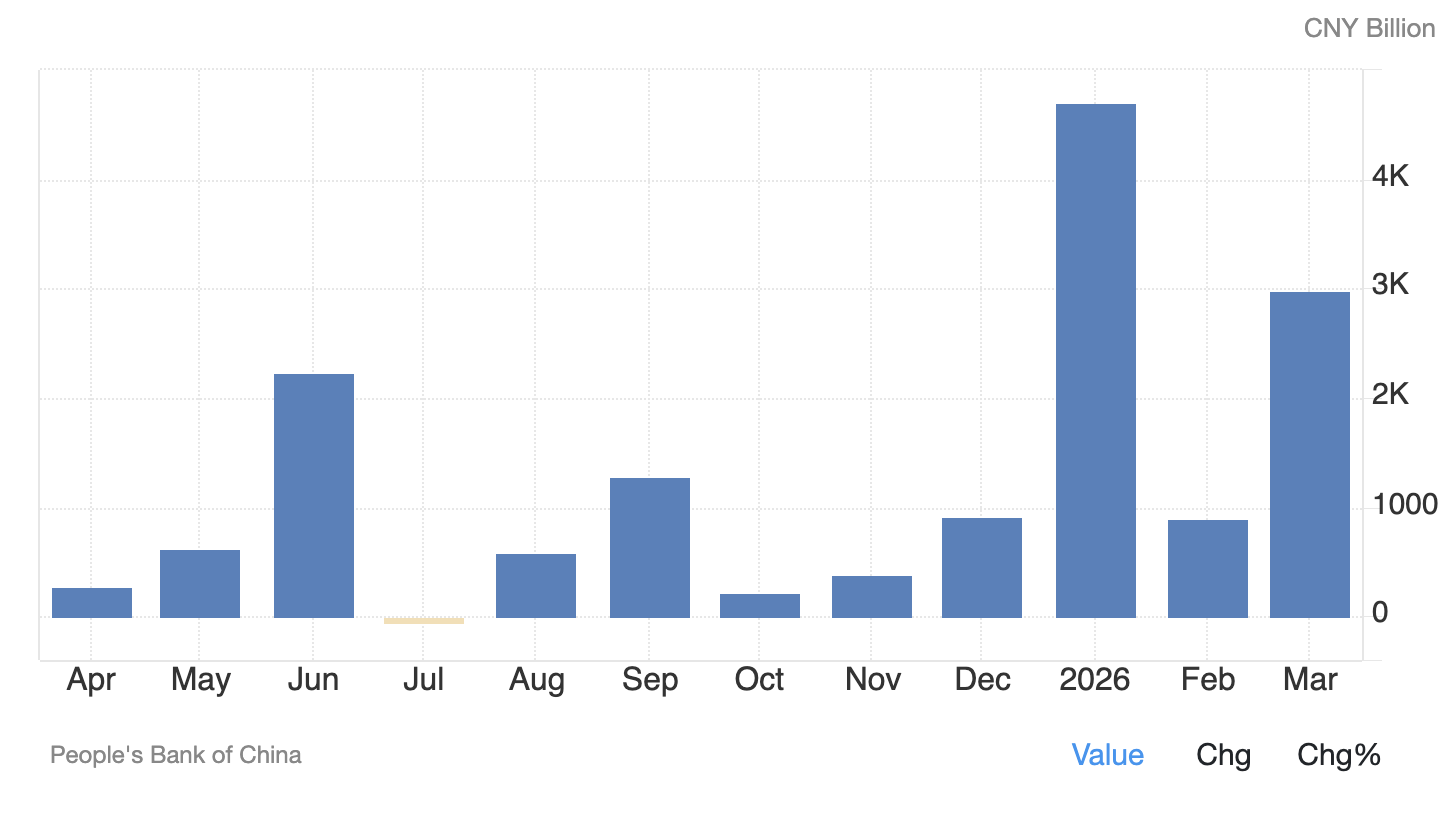
Analysts pointed to several factors that may have contributed to the slowdown. These include a renewed emphasis in Beijing on curbing financial risks, a possible reduction in the effectiveness of tools used by the People’s Bank of China, and weak domestic demand that is not absorbing additional credit from the government and local lenders.
One market analyst favored the view that weak demand was the main factor and added that rising energy costs reduce the capacity of households and firms to take on new loans.
Energy market developments have pushed oil prices higher after disruptions to flows through the Strait of Hormuz. China has sourced about 15% of its crude from Iran in recent years. Higher fuel and power costs raise operating expenses for companies and squeeze household budgets, which analysts say can lower demand for credit.
Lower bank lending can reduce the flow of credit to property developers, manufacturers and consumers. Policymakers have emphasized supporting domestic demand while containing financial-system risks. Investors and businesses will watch upcoming monthly lending and credit aggregate data, along with energy-price movements, for signals about the economic outlook.
The content on The Coinomist is for informational purposes only and should not be interpreted as financial advice. While we strive to provide accurate and up-to-date information, we do not guarantee the accuracy, completeness, or reliability of any content. Neither we accept liability for any errors or omissions in the information provided or for any financial losses incurred as a result of relying on this information. Actions based on this content are at your own risk. Always do your own research and consult a professional. See our Terms, Privacy Policy, and Disclaimers for more details.
Articles by this author