Cartier heir sentenced to 8 years in $470M crypto laundering case

A U.S. judge sentenced a Cartier heir to eight years in prison for helping launder about $470 million in cryptocurrency using exchanges, mixers and shell companies.
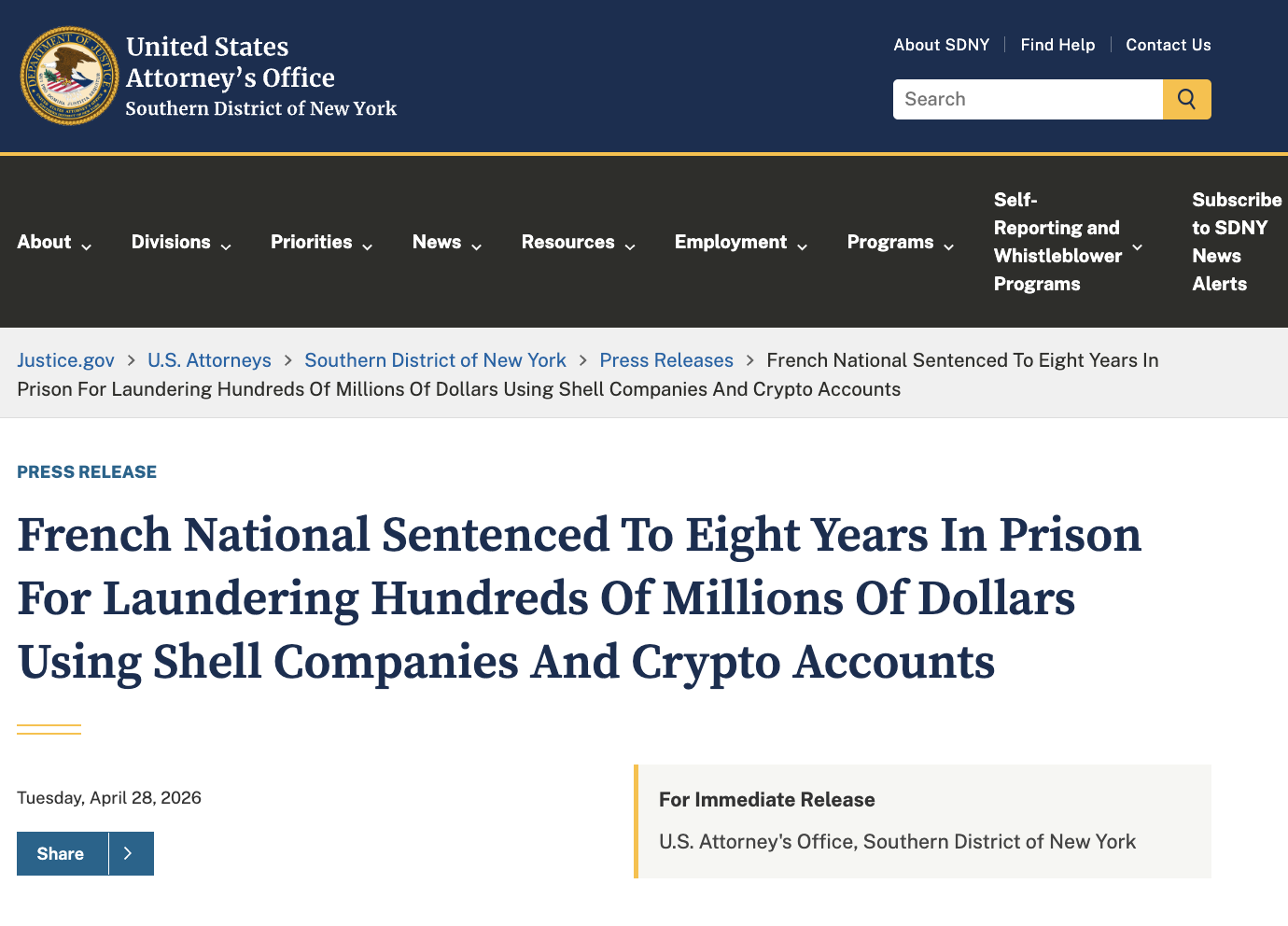
A U.S. federal judge on Tuesday sentenced a Cartier heir to eight years in prison after finding he helped conceal and move roughly $470 million in cryptocurrency through a network of accounts, shell companies and payment processors.
The sentence was handed down in federal court in Manhattan, capping a multi-year investigation by U.S. prosecutors into large-scale transfers they allege were structured to hide the origin and destination of funds. Court filings describe hundreds of transactions routed through exchanges, mixing services, over-the-counter trading desks and jurisdictions with lighter oversight.
Prosecutors wrote that the defendant used dozens of accounts opened under nominal names and corporate entities to convert digital coins to fiat currency and move value internationally. Law enforcement executed seizures of cryptocurrency wallets and froze related bank accounts during the investigation.
The defendant was convicted on counts including conspiracy to commit money laundering and operating an unlicensed money-transmitting business. In imposing the eight-year term, the judge cited the volume of funds involved, the methods used to frustrate monitoring, and the duration of the scheme. The court also ordered forfeiture of proceeds traceable to the scheme and directed restitution and additional asset forfeitures as requested by the government.
Investigators relied on blockchain analysis, traditional financial records and cooperation from foreign authorities to trace chains of transfers across multiple platforms and jurisdictions, prosecutors reported. Filings identify use of so-called mixers and repeated conversion between tokens and fiat as steps intended to obscure ownership and break audit trails.
Defense filings acknowledged the defendant’s role in moving digital assets while urging a reduced sentence. The defense pointed to cooperation with investigators, the defendant’s personal history and the family’s charitable activities and argued the defendant did not personally benefit to the extent alleged.
The judge rejected the request for a shorter term, emphasizing deterrence and the need to hold facilitators accountable in cases that involve substantial volumes of laundered funds.
The case is part of wider enforcement activity by U.S. authorities targeting misuse of cryptocurrency for criminal finance. Regulators and prosecutors have increased scrutiny of mixing services, peer-to-peer platforms and unlicensed money transmitters and have applied anti-money-laundering statutes and licensing rules to actors in the digital-asset sector.
Legal experts noted improvements in transaction tracing that enable investigators to follow token movements on public ledgers and connect those flows to intermediaries and on- and off-ramps where funds enter the regulated financial system. The outcome may affect compliance and customer-due-diligence practices among firms and individuals involved in crypto services.
The content on The Coinomist is for informational purposes only and should not be interpreted as financial advice. While we strive to provide accurate and up-to-date information, we do not guarantee the accuracy, completeness, or reliability of any content. Neither we accept liability for any errors or omissions in the information provided or for any financial losses incurred as a result of relying on this information. Actions based on this content are at your own risk. Always do your own research and consult a professional. See our Terms, Privacy Policy, and Disclaimers for more details.
Articles by this author