Buchman: instant settlement is squeezing crypto capital
Ethan Buchman warned instant on-chain settlement forces traders and protocols to pre-position more capital across chains, reducing usable liquidity and raising trading costs.
Ethan Buchman, a co-founder of Cosmos and founder of Cycles Protocol, warned recently in public comments on settlement design in decentralized finance that the push for instant on-chain settlement is reducing capital efficiency by forcing traders, market makers and protocols to hold more liquidity across chains and formats.
Buchman explained that when trades achieve immediate finality on-chain, parties lose the ability to net positions or use short-term credit that exists in traditional finance. That requires each counterparty to post full value at the time of trade, tying up funds that could otherwise be used for lending, staking or market-making.
The effects are visible across decentralized markets. Decentralized exchanges (DEX) and automated market makers need deeper pools on every chain to handle comparable volumes to legacy venues. Cross-chain trading often relies on wrapped or escrowed assets that lock capital while transfers settle. Market makers maintaining tight spreads must hold inventory on multiple rails, increasing funding costs. Bridges that use lock-and-mint models require collateral, and clearing between chains does not include the multilateral netting used by conventional clearinghouses.
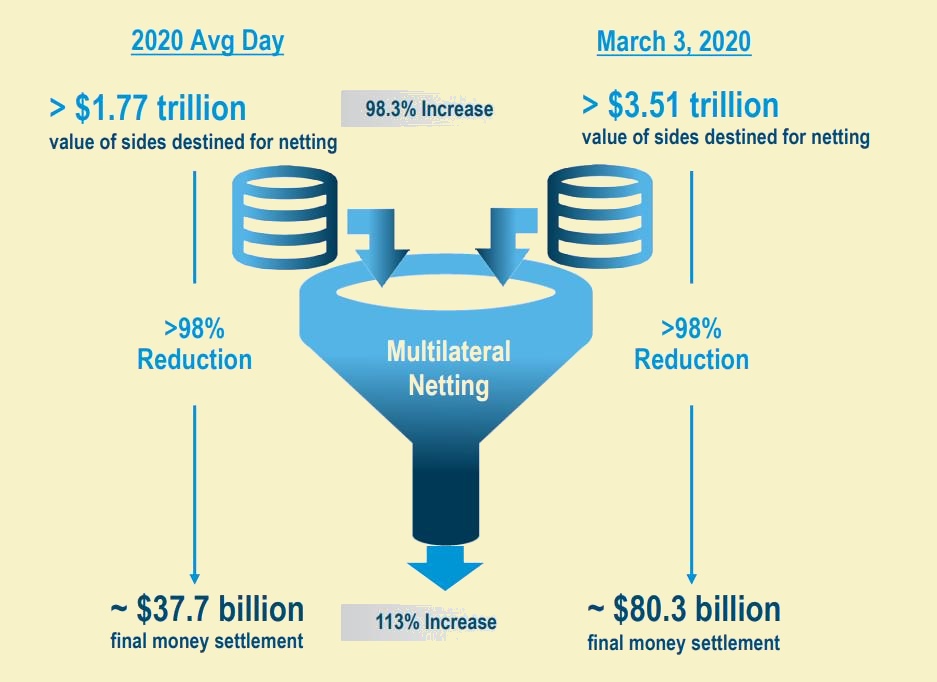
Industry teams are testing approaches to lower the capital burden. Layer-2 solutions and state channels enable off-chain execution with less frequent on-chain settlement. Liquidity networks and pooled-collateral arrangements allow users to share collateral instead of each posting full value on every chain. Some projects are designing mechanisms to approximate netting and centralized clearing inside decentralized frameworks.
Custodians, exchanges and funds are weighing the operational costs of keeping capital distributed for instant settlement against the benefits of speed and finality. According to Buchman, higher capital requirements could prompt some market participants to scale back activity or widen bid-ask spreads, which would reduce trading volumes and liquidity depth.
Technologists and researchers continue to debate trade-offs among settlement speed, security and capital efficiency. Buchman argued that addressing the capital inefficiency will likely require technical changes and new market structures that permit safe forms of netting or shared liquidity without reintroducing undue counterparty exposure.
Ethereum, newer layer-1s and many cross-chain systems have emphasized faster settlement and stronger finality. That design choice has encouraged developers to reduce off-chain dependencies and has changed where liquidity must be held and how much collateral protocols and users must maintain.
The content on The Coinomist is for informational purposes only and should not be interpreted as financial advice. While we strive to provide accurate and up-to-date information, we do not guarantee the accuracy, completeness, or reliability of any content. Neither we accept liability for any errors or omissions in the information provided or for any financial losses incurred as a result of relying on this information. Actions based on this content are at your own risk. Always do your own research and consult a professional. See our Terms, Privacy Policy, and Disclaimers for more details.
Articles by this author