U.S. CPI holds at 2.4% in February as gas prices jump after Iran war

U.S. CPI rose 2.4% in February, unchanged and under the 2.5% forecast. The data precede the late-February Iran war; since then, gasoline has climbed about 60 cents a gallon.
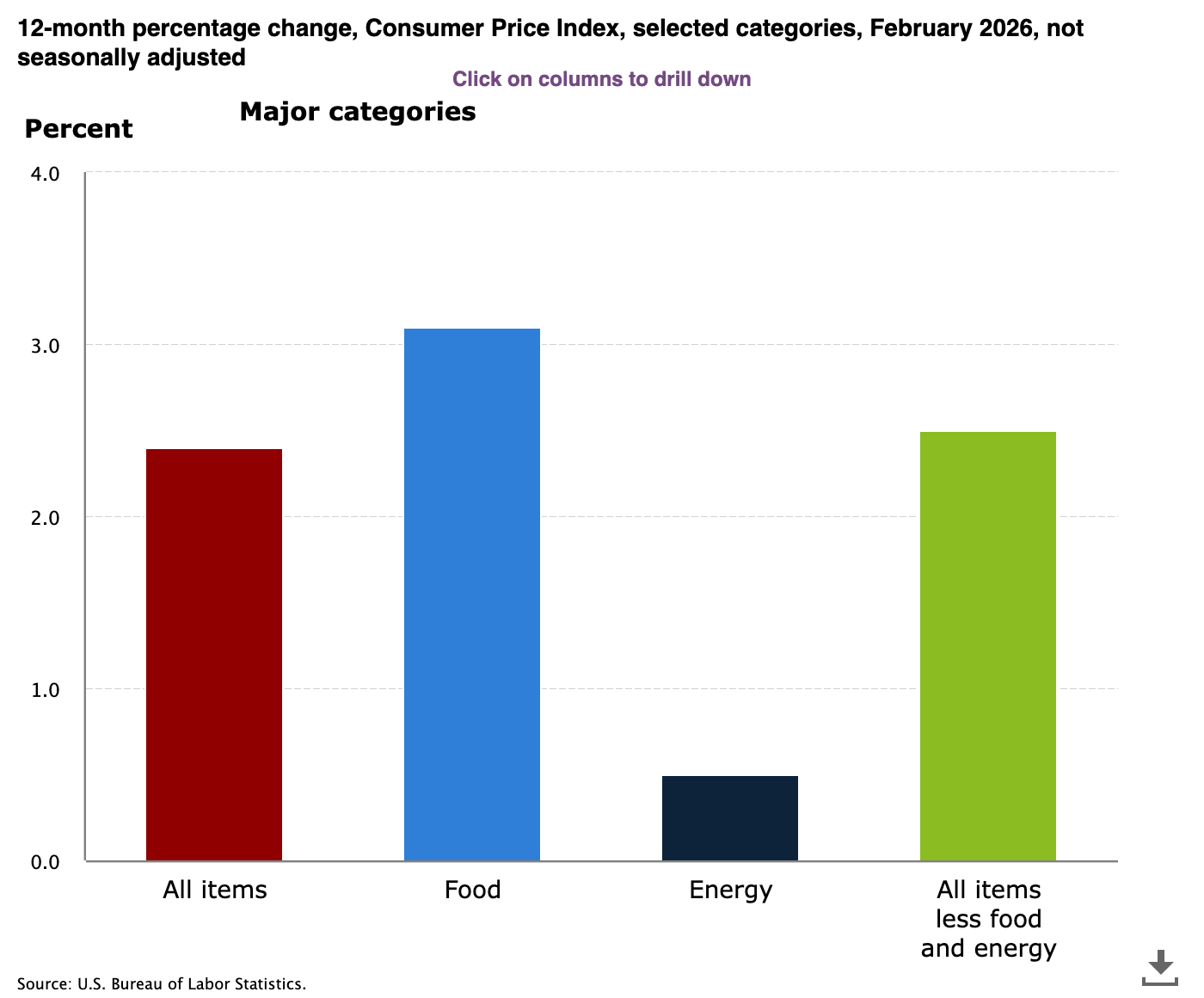
U.S. consumer prices increased 2.4% in February from a year earlier, matching January's rate and coming in below the 2.5% forecast from economists. The Labor Department released the report on March 11, covering conditions before the late February Iran war and the subsequent rise in fuel costs.
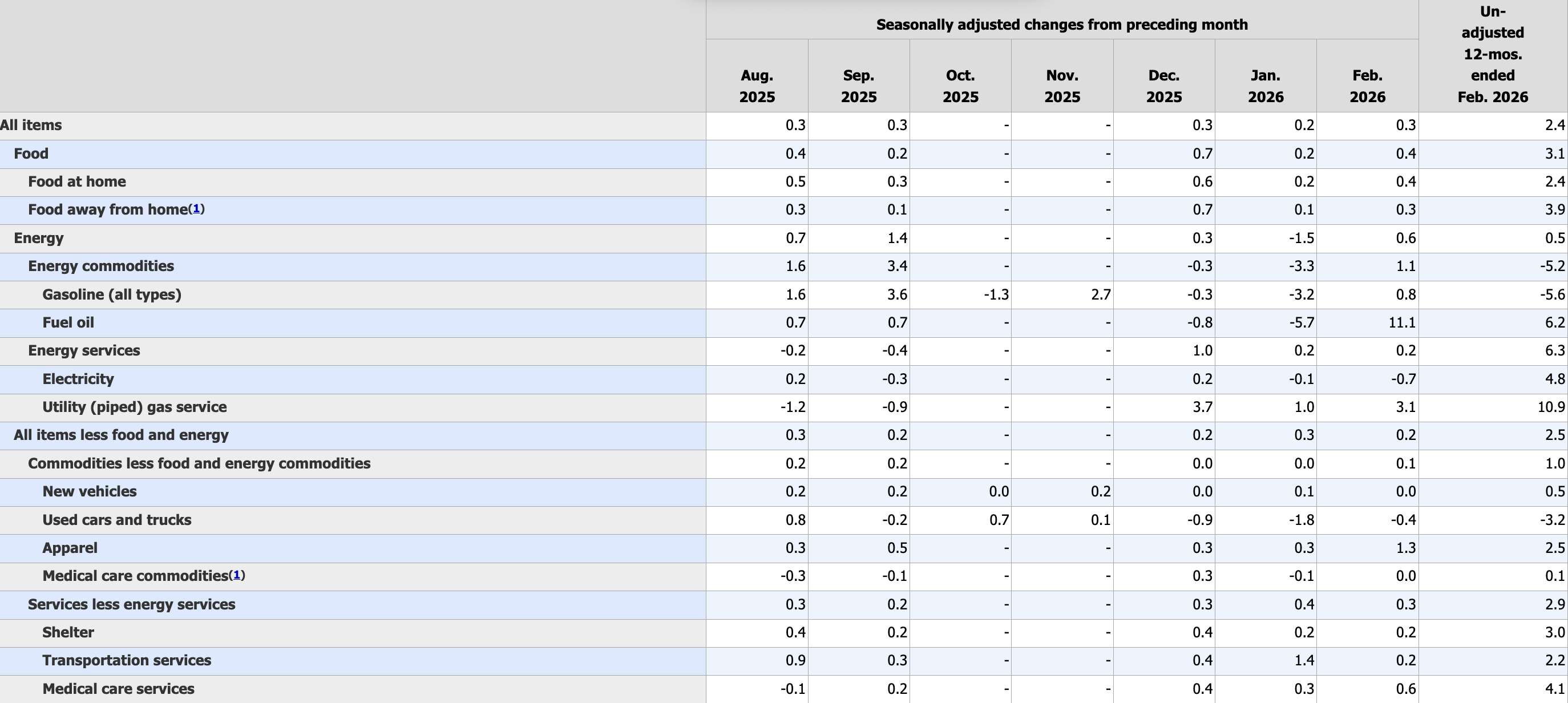
Core CPI, which excludes food and energy, rose 2.5% year over year, the same pace as in January, Bureau of Labor Statistics data show.
Food prices continued to outpace overall inflation. Grocery prices were up 3.1% from a year earlier, while the index for food away from home, which covers restaurants and takeout, rose 3.9%.
Gasoline declined 5.6% from a year earlier in the February report. Since the start of the conflict in late February, average pump prices have risen by roughly 60 cents a gallon, or about 20%.
A March 10 research note from Deutsche Bank described the recent disinflation path as “murkier” and indicated that higher energy costs could lift headline inflation in the months ahead.
On a three-month basis, CPI averaged 2.5%. That compares with about 2.9% in August, September and November. October's CPI report was canceled because of the government shutdown.
The Consumer Price Index measures price changes for a basket of goods and services commonly purchased by households, including housing, transportation, food and medical care.
The February figures provide a baseline before the conflict and the rise in oil and gasoline. Upcoming data for March will capture price movements after those developments.
The content on The Coinomist is for informational purposes only and should not be interpreted as financial advice. While we strive to provide accurate and up-to-date information, we do not guarantee the accuracy, completeness, or reliability of any content. Neither we accept liability for any errors or omissions in the information provided or for any financial losses incurred as a result of relying on this information. Actions based on this content are at your own risk. Always do your own research and consult a professional. See our Terms, Privacy Policy, and Disclaimers for more details.
Articles by this author