Supply chain paralysis tops Allianz global Black Swan list
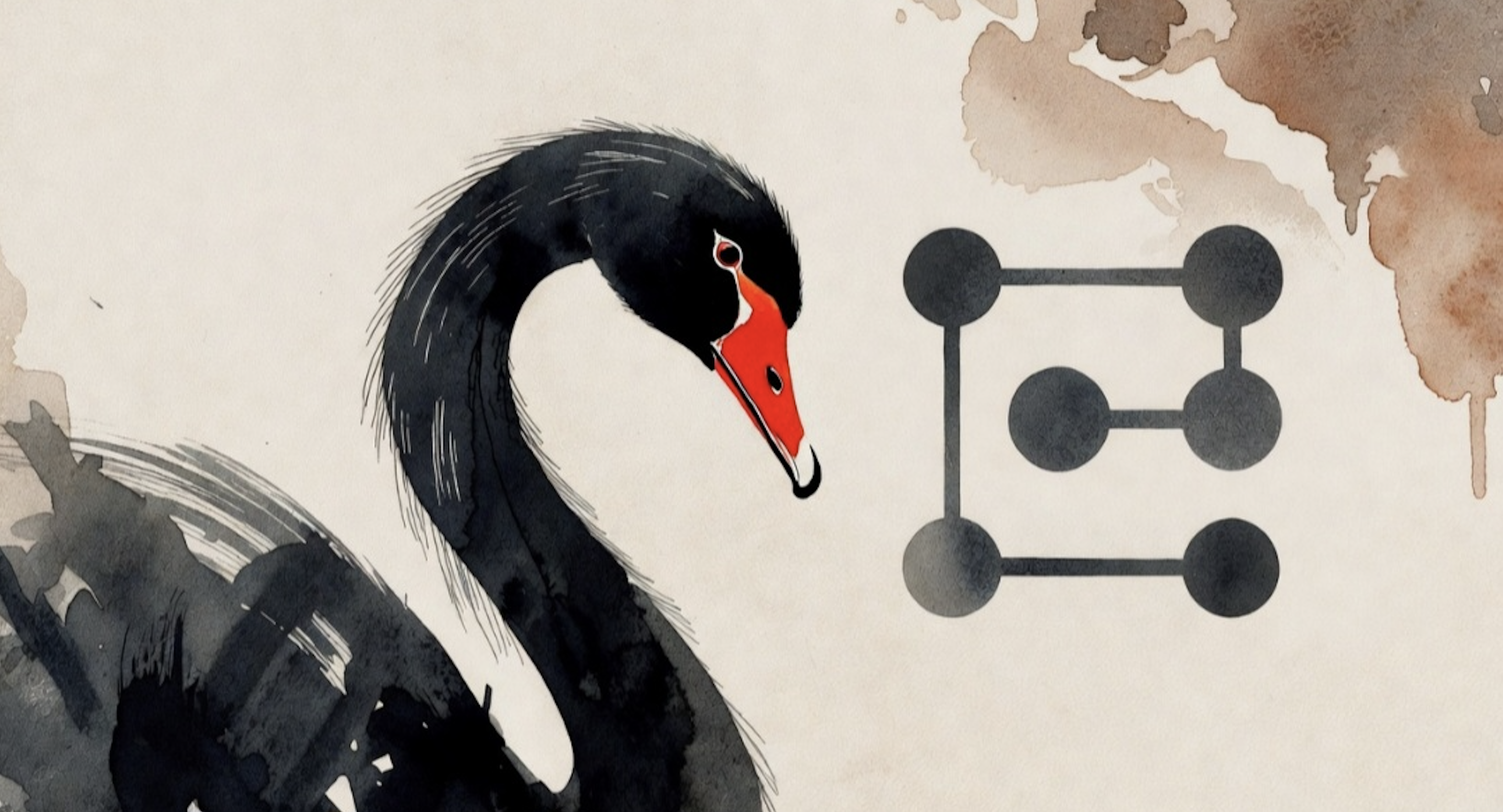
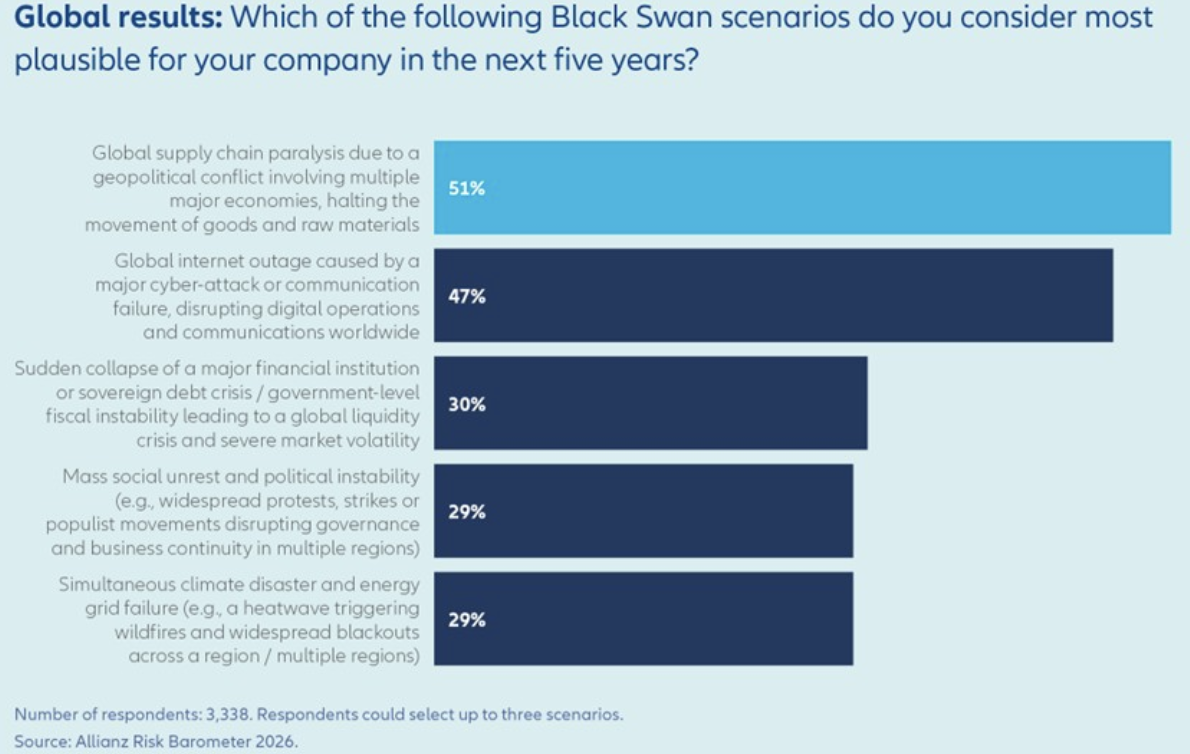
Allianz’s Risk Barometer shows 51% of 3,000+ firms rank a geopolitics-driven supply chain paralysis as the top black swan over the next five years, with a global internet outage next at 47%.
Allianz surveyed more than 3,000 companies worldwide for its latest Risk Barometer. A geopolitics-driven global supply chain paralysis emerged as the most plausible black swan over the next five years, selected by 51% of respondents. A global internet outage followed at 47%.
The survey asked businesses of varying sizes and sectors which rare, high-impact events could disrupt operations over a five‑year horizon. The rankings reflect concern over tariffs, trade restrictions and protectionist policies, as well as conflicts such as Russia–Ukraine and tensions in the Middle East that could slow cross‑border flows of goods and components.
In Asia-Pacific, responses closely mirrored the global results. Supply chain paralysis ranked first in China and Hong Kong, Singapore and South Korea. A global internet outage led in Australia, India, Japan, Malaysia and Thailand.
By company size, large corporates with more than $500 million in annual revenue most often selected supply chain paralysis (55%), with mid-sized firms at 52%. Smaller businesses, below $100 million in revenue, were most concerned about a global internet outage (45%). For mid-sized and smaller firms, the sudden collapse of a major financial institution ranked third, while larger companies prioritized the risk of a simultaneous climate disaster and energy grid failure.
Across all respondents, the sudden failure of a major financial institution or a sovereign debt crisis ranked third at 30%. Mass social unrest and political instability ranked fourth at 29% and appeared among the top three in the Americas and Africa and the Middle East, as well as in France.
Recent shocks frame the discussion. The 9/11 attacks, the 2008 global financial crisis and the COVID-19 pandemic produced heavy economic and insurance losses. Allianz Research estimates the pandemic reduced global GDP by about $12 trillion from 2020 through 2023.
In modeling the impact of future shocks, Allianz Research estimates that a global supply chain disruption on the scale of the war in Ukraine could cut around $1.5 trillion from world GDP over two years.
Thomas Lillelund, CEO of Allianz Commercial:
“Although Black Swan events are not seen to be immediately likely, these rare, high‑impact scenarios are perceived as increasingly plausible and should be considered by executive boards given their potential consequences. Growing interconnectivity across both physical and digital supply chains means disruptions now cascade much faster and can turn into major losses.”
He added: “In today’s fragmented geopolitical environment, companies must double down on resilience and integrated risk management to ride out the next perfect storm.”
Michael Bruch, global head of risk consulting advisory services at Allianz Commercial:
“Awareness of Black Swans and the need to build resilience has increased in recent years, but businesses can never fully prepare for rare high impact events such as a global outage or an unforeseen climate‑related catastrophe. Building organizational agility, fostering a risk‑aware culture and developing scalable response plans for a range of scenarios remain the most practical steps to best prepare for Black Swan events. Insurers can help businesses strengthen their cyber resilience and support more informed decisions when assessing and selecting critical suppliers.”
For insurers and brokers, the results highlight the need to assess accumulation risk, clarify coverage for systemic events-especially cyber incidents and non‑damage business interruption-and expand risk consulting support as low‑probability, high‑impact scenarios move into core risk planning.
The content on The Coinomist is for informational purposes only and should not be interpreted as financial advice. While we strive to provide accurate and up-to-date information, we do not guarantee the accuracy, completeness, or reliability of any content. Neither we accept liability for any errors or omissions in the information provided or for any financial losses incurred as a result of relying on this information. Actions based on this content are at your own risk. Always do your own research and consult a professional. See our Terms, Privacy Policy, and Disclaimers for more details.
Articles by this author