Sovereign funds favor ETFs, equities over direct crypto
Sovereign wealth funds gain crypto exposure mainly through spot bitcoin ETFs, public equities, infrastructure investments and venture funds; direct token holdings remain rare.
Sovereign wealth funds obtain exposure to digital assets mainly through spot bitcoin exchange-traded funds, shares in public companies with crypto exposure, investments in blockchain infrastructure and venture capital funds. Direct ownership of tokens is uncommon because of governance rules, custody demands and political oversight.
Sovereign funds collectively managed more than $13 trillion as of 2026. Their long investment horizons allow them to hold volatile positions for multiple years and to use familiar brokerage, reporting and audit systems for new allocations.
Spot bitcoin ETFs are the most common vehicle. ETFs trade on regulated exchanges, use qualified custodians and generate audited disclosures, which lets funds buy them through existing brokerage and reporting frameworks without managing private keys.
Some funds buy listed stocks that hold bitcoin or earn revenue from crypto services. Those equity positions give token-linked exposure while avoiding direct custody. Larger funds also invest in venture and private equity to back custody providers, tokenization platforms, exchanges and blockchain infrastructure; such investments are structured as stakes in companies rather than direct token holdings.
Public filings and disclosures provide examples of different approaches. Abu Dhabi’s Mubadala disclosed 14,721,917 shares of an IBIT spot bitcoin ETF worth about $566 million as of March 31, 2026; a related Abu Dhabi vehicle, Al Warda Investments, built a parallel position and the two together exceeded $1 billion by the end of 2025. Luxembourg’s Intergenerational Sovereign Fund allocated 1% of its roughly $800 million portfolio to bitcoin ETFs in October 2025. Singapore’s GIC participated in funding rounds for crypto infrastructure, including an early backing of Coinbase, while Temasek recorded a $275 million write-off tied to the 2022 collapse of the FTX exchange and has since favored indirect exposure through venture funds. Norway’s Government Pension Fund Global holds no direct bitcoin or ETFs; research estimated its incidental crypto exposure at the equivalent of about 9,573 BTC as of December 31, 2025, representing under 0.04% of the fund. Bhutan’s Druk Holding and Investments mined bitcoin using surplus hydropower and reported roughly 13,000 BTC by October 2024.
Funds cite several practical constraints when avoiding direct coin ownership. Holding tokens requires secure wallet management, insurance, bespoke custody arrangements and consistent valuation practices. Disclosure of direct holdings is less standardized than for securities, so where tokens are held they are often visible only through on-chain analysis or voluntary statements.
Risks that funds identify include large price swings, regulatory changes affecting custody or reporting, operational failures and insurance gaps, and valuation challenges for private crypto businesses. Bitcoin fell about 50% from a 2025 peak to a June 2026 low near $58,000, an example of how reported values can move sharply.
Many funds keep crypto exposures small and tightly governed. Some impose caps-Luxembourg set a 1% limit-while approvals commonly require investment committees and written policies. Funds typically distribute exposure across ETFs, public equities and venture positions and rely on qualified custodians with audited controls and insurance, including providers operating under national bank charters.
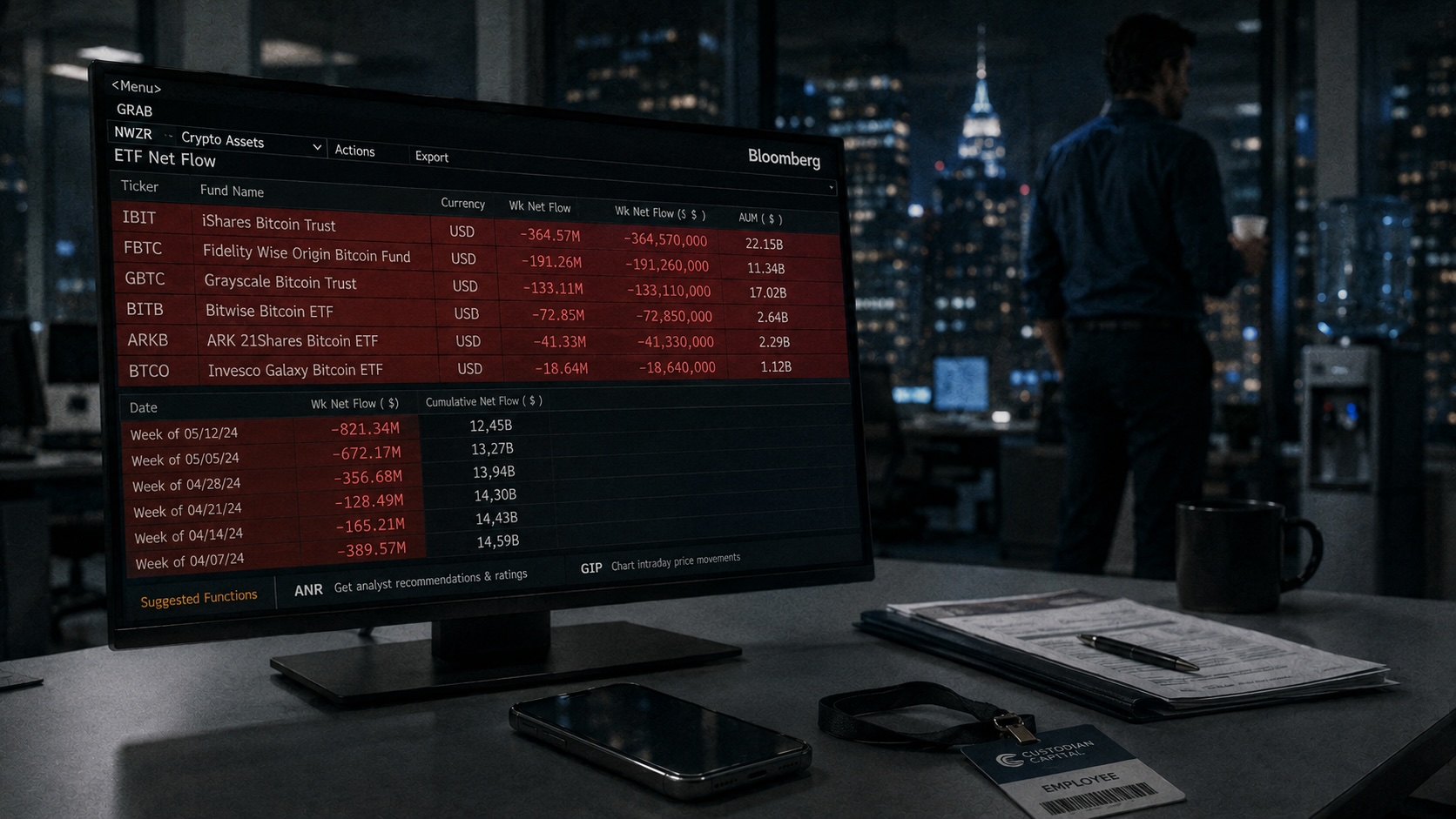
The range of regulated products has expanded beyond spot bitcoin ETFs to include spot funds for other tokens such as Ethereum, Solana and XRP, and tokenized versions of traditional instruments such as treasuries and money market vehicles are emerging. 2026 disclosures show mixed activity: some sovereign funds added or maintained positions while others reduced holdings. U.S. spot bitcoin ETFs also experienced periods of significant outflows during 2026.
The content on The Coinomist is for informational purposes only and should not be interpreted as financial advice. While we strive to provide accurate and up-to-date information, we do not guarantee the accuracy, completeness, or reliability of any content. Neither we accept liability for any errors or omissions in the information provided or for any financial losses incurred as a result of relying on this information. Actions based on this content are at your own risk. Always do your own research and consult a professional. See our Terms, Privacy Policy, and Disclaimers for more details.
Articles by this author