Bitwise CIO: STRC Selloff an End-of-Cycle Deleveraging
Bitwise CIO Matt Hougan called the STRC preferred stock sell-off “painful but necessary,” saying such deleveraging often comes before a bitcoin market bottom.
Bitwise Chief Investment Officer Matt Hougan described the sharp drop in Strategy’s STRC perpetual preferred stock as a “painful but necessary” end-of-cycle deleveraging and linked the move to recent weakness in bitcoin. He traced the stress to late June, when bitcoin fell below $60,000 and STRC moved away from its $100 par.
STRC launched last year as a perpetual preferred equity instrument meant to support Strategy’s bitcoin purchases. The security began with a 9% nominal yield and included an automatic coupon increase of 0.25 to 0.50 percentage points each time the price traded below $100. That mechanism pushed the nominal rate to about 11.5%, attracted roughly $10.5 billion of investor capital and helped fund Strategy’s bitcoin buying until investor doubts grew and STRC fell toward $75.
Hougan presented a balance-sheet view to explain why some concerns were overstated. He noted Strategy holds about $49.6 billion in bitcoin and $2.6 billion in cash against $6.8 billion in debt and $15.5 billion in preferred equity. Using those figures, he estimated Strategy could cover roughly 28 years of dividend obligations if it sold its bitcoin today. Hougan also pointed out the company can suspend STRC dividends at its discretion, and that uncertainty contributed to the market reaction.
On June 29, Strategy introduced a new dividend-funding framework. The company said it would stop automatically increasing STRC’s coupon to defend the $100 price, allow the preferred to trade at a variable price, periodically sell bitcoin to fund dividends and potentially repurchase STRC on the open market. Both Strategy’s common shares and STRC rose after the announcement. At a roughly $75 price, STRC’s effective yield had reached about 15.4%, a level Hougan said made further nominal coupon increases impractical.
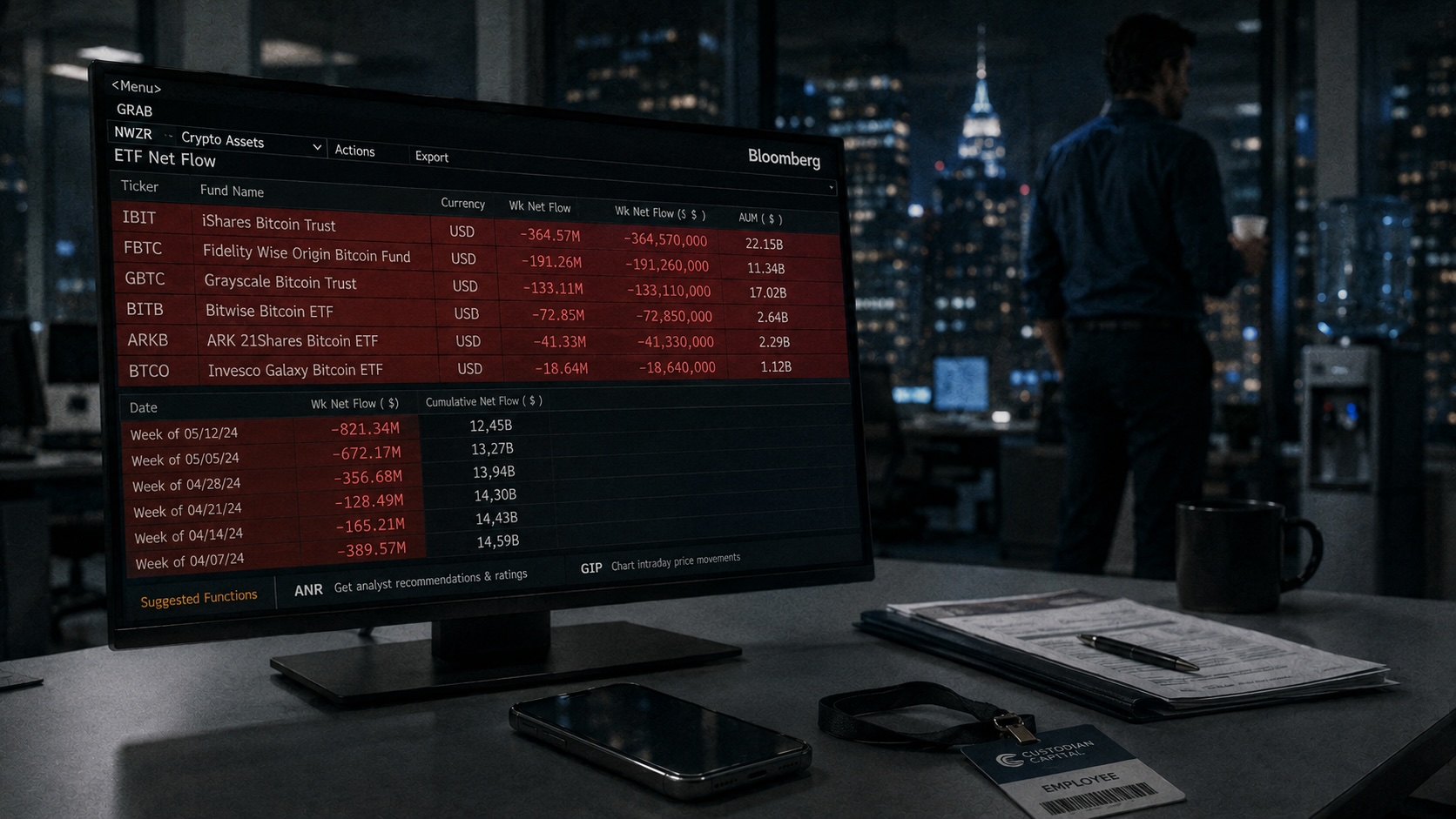
Hougan said Strategy’s role as a dominant, one-way buyer of bitcoin is likely over. He expects the firm to buy or sell depending on market conditions but does not foresee forced large-scale liquidation because nothing in Strategy’s structure forces sales exceeding a few billion dollars a year. He pointed to other institutional demand for bitcoin, noting more than $50 billion of cumulative bitcoin ETF inflows since 2024 and examples of banks and state-level reserves adding exposure.
Bitwise’s European head of research, Andre Dragosch, offered a similar timeline, suggesting July could mark a shift from a bear to a bull regime and that markets might price in a bottom ahead of broader consensus by October. Hougan compared the STRC unwind to the 2021 GBTC premium collapse, when an institutional arbitrage trade that had driven large inflows reversed and had to be cleared before markets recovered.
Hougan listed specific indicators he is watching for a bottom: Strategy’s common stock trading at a discount to net asset value, the Crypto Fear and Greed Index nearing historic lows, and bitcoin funding rates turning negative as more retail traders bet on lower prices. He expects a new bull market to take hold by fall but acknowledged that market bottoms are usually obvious only after they occur.
The content on The Coinomist is for informational purposes only and should not be interpreted as financial advice. While we strive to provide accurate and up-to-date information, we do not guarantee the accuracy, completeness, or reliability of any content. Neither we accept liability for any errors or omissions in the information provided or for any financial losses incurred as a result of relying on this information. Actions based on this content are at your own risk. Always do your own research and consult a professional. See our Terms, Privacy Policy, and Disclaimers for more details.
Articles by this author