Bitcoin Falls Below $65,000 Ahead of Fed’s Warsh Test
Bitcoin dipped to about $64,550 as markets awaited the Fed rate decision at Kevin Warsh’s first meeting and weighed Strategy’s potential bitcoin sales to fund dividends.
Bitcoin slipped to roughly $64,550 on Wednesday as investors awaited the Federal Reserve's rate decision at Kevin Warsh's first policy meeting and considered the possibility that Strategy could sell bitcoin to fund dividend payments.
Market participants expected the Fed to hold its policy rate at 3.50% to 3.75%. Attention centered on the Fed's updated economic projections and the quarterly dot plot, which traders view as guidance on future policy moves. A U.S.-Iran memorandum of understanding that eased recent tensions pushed crude oil prices lower, and some market participants said energy prices may influence near-term bitcoin moves.
Lacie Zhang, a research analyst at Bitget Wallet, noted that the Fed meeting was likely to deliver stability rather than a policy pivot. Zhang placed bitcoin's near-term range at about $64,000 to $68,000 if oil remains in the $80 to $85 range and Fed messaging stays neutral, and warned that a hawkish surprise could push prices toward $62,000 to $63,000.
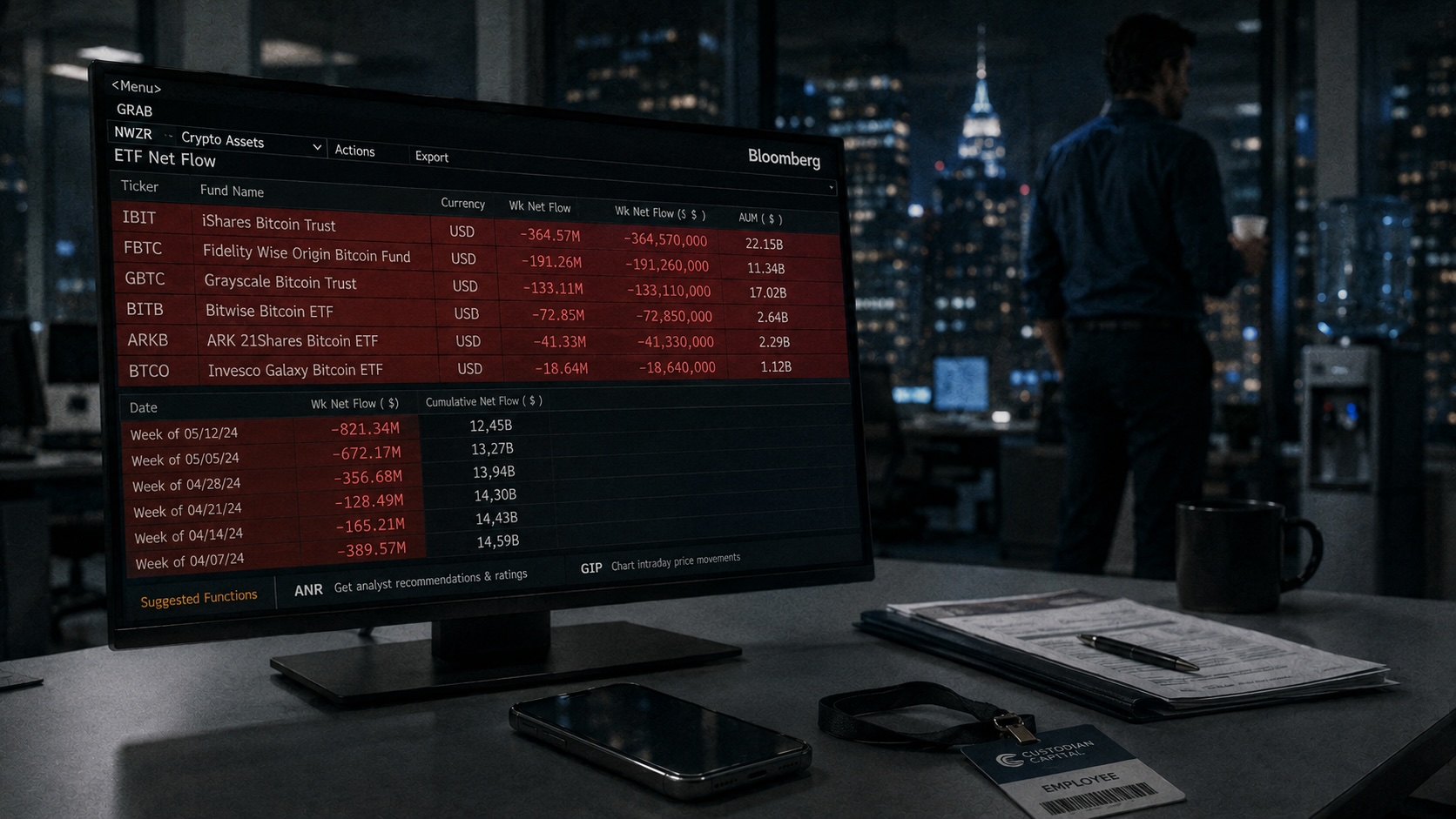
Spot bitcoin exchange-traded funds recorded net inflows of $10.1 million on June 16. Spot ether ETFs drew $9.6 million on the same day.
QCP Capital highlighted that Warsh arrived with a reputation for favoring lower rates, but that view now competes with higher inflation and a divided Fed board. Headline inflation has risen to about 4.2% year-over-year, and QCP noted markets are pricing roughly half a percentage point of additional tightening for 2026. Traders were watching the dot plot for confirmation that policy would remain restrictive.
Kyle Rodda, senior analyst at Capital.com, pointed to risk reduction on Wall Street ahead of the decision and flagged expectations the Fed would remove any explicit easing bias from its statement. He also noted market odds of about a 60% chance of a rate hike by year-end and said Warsh's first press conference could have significant market influence.
On-chain and derivatives data painted a cautious picture for the bitcoin rally. Analysts noted the recovery from the June 5 cycle low of $59,200, a roughly 13.5% bounce, reflected seller exhaustion and a temporary macro reprieve rather than broad new demand. Open interest in futures fell from an October 2025 peak above $90 billion to around $42.6 billion by the end of May and did not rebuild during the recent price rise. Funding rates have returned to positive territory, indicating leveraged long positions are re-entering the market even as spot demand remains muted.
Analysts at Bitfinex set a base case trading range between $60,000 and the quarterly open at $68,266 and said a sustained breakout would require steady ETF inflows, Strategy reclaiming its $100 preferred stock par, open interest rising with price, and a close above the quarterly open. They added that a daily close below $60,000 and the $59,200 cycle low could open room toward the aggregate realized price near $54,000.
Concerns about Strategy's balance sheet weighed on sentiment. The firm bought back about $1.5 billion of 2029 convertible senior notes, then raised roughly $200 million by selling common shares and used the proceeds to continue buying bitcoin and extend its runway to fund dividends to about 7.5 months. Strategy added 1,587 BTC last week, about $100 million, while its preferred shares traded below par and its common stock has fallen from recent highs.
Options markets showed demand for downside protection. Implied volatility exceeded realized volatility and skew widened as dealers and investors bought puts; one-week skew rose to about 30% and one-month skew climbed to roughly 24%.
CryptoQuant reported sell pressure on spot exchanges for tokens excluding bitcoin and ether at a five-year extreme. Ki Young Ju, founder of CryptoQuant, wrote that ‘the era of making money just by issuing a token is over' and highlighted tokenized market layers, revenue-generating DeFi protocols, and projects tied to stablecoins, tokenized stocks and blockchain infrastructure for AI agents as categories with more durable use cases.
Markets entered the Fed decision with risk assets de-risked and traders focused on the combination of policy messaging, oil prices, ETF flows and corporate treasury behavior to determine the next leg for bitcoin.
The content on The Coinomist is for informational purposes only and should not be interpreted as financial advice. While we strive to provide accurate and up-to-date information, we do not guarantee the accuracy, completeness, or reliability of any content. Neither we accept liability for any errors or omissions in the information provided or for any financial losses incurred as a result of relying on this information. Actions based on this content are at your own risk. Always do your own research and consult a professional. See our Terms, Privacy Policy, and Disclaimers for more details.
Articles by this author